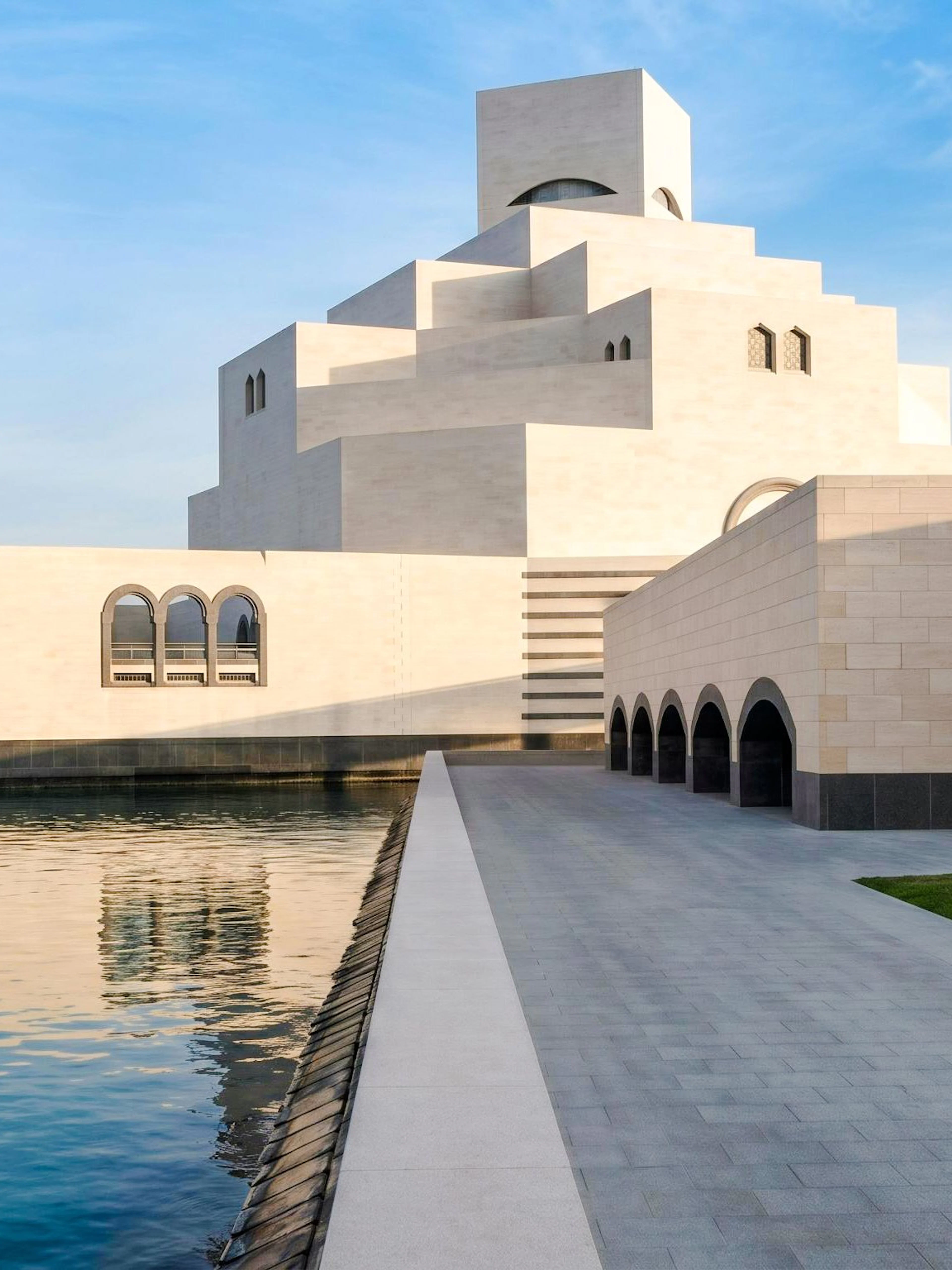
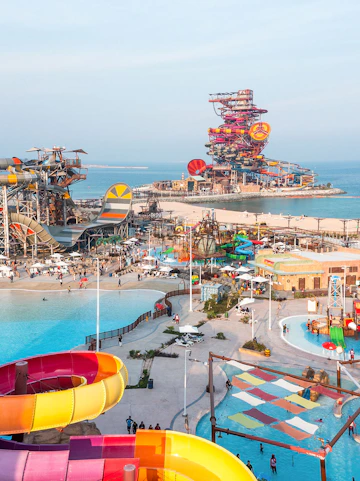

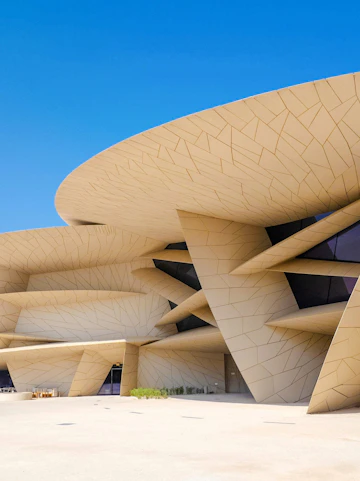
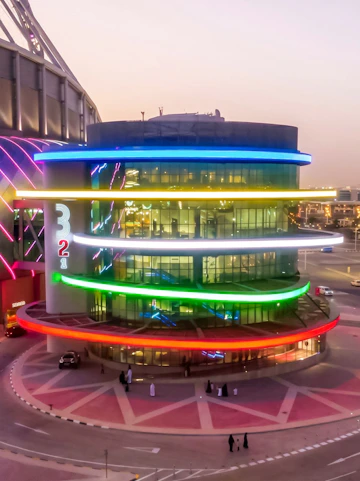
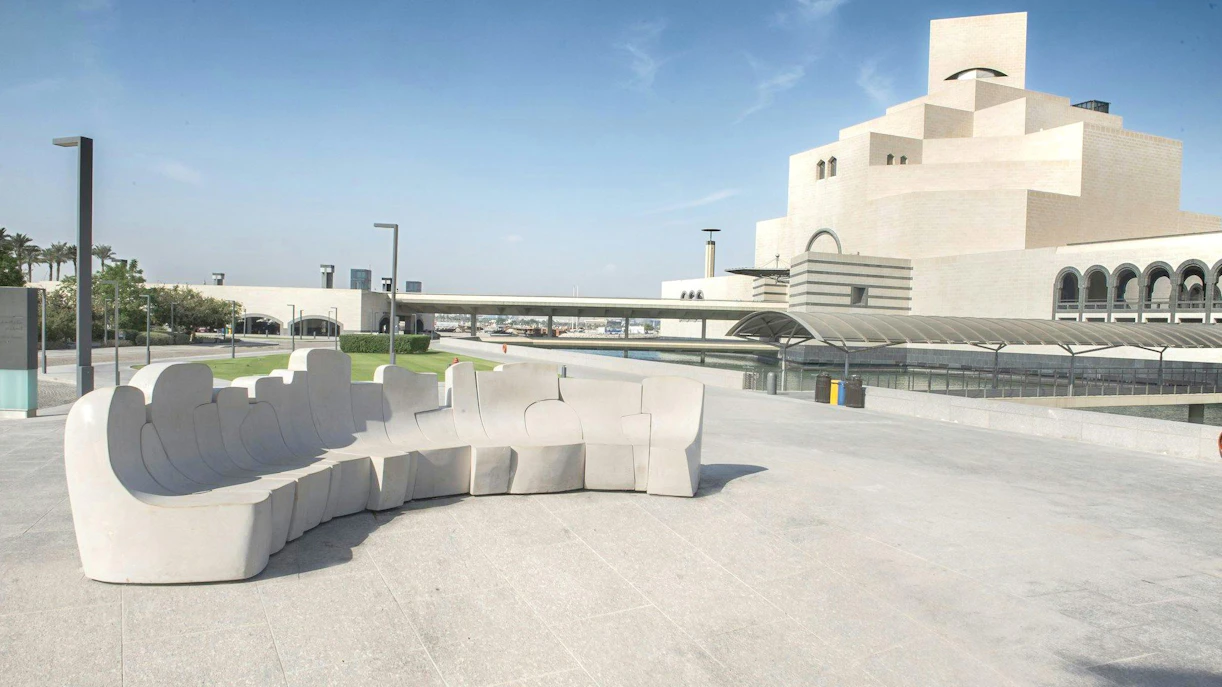
MIA Park sits beside the museum on the waterfront and is the most natural extension of a Museum of Islamic Art visit. Many visitors head here after the galleries for skyline views and a promenade walk. Major park events can make weekend parking tighter.
Access: Yes; free, no museum ticket needed
Experience the best of Museum of Islamic Art
Crafted by Headout, a global experiences brand offering curated tours, tickets & experiences. Discover with ease, book with peace.Loved by over 56 million guests worldwide
Top things to do in Doha
How Headout makes choosing experiences effortless
We curate the best ways to experience
We research and organise all unique experiences - from tickets to tours to special combos - so you get all the choices without the clutter.
We partner with the best
Every supplier is vetted for quality, reliability, and value so you only get top rated experiences. No surprises, no disappointments.
All the best options, in one place
Each experience is thoughtfully organised to give you maximum availability, great value and an easy way to choose.
Book with complete peace of mind
Free cancellations, Flexible payments, and 24/7 support - thoughtfully designed for flexibility, assurance, and total peace of mind.
Slide 1 of 41/4
Slide 1 of 4

Quick overview
- Ticket options: Museum of Islamic Art tickets cover self-guided entry; this collection includes a QR audio guide, plus access to permanent and temporary exhibitions.
- Additional access: No add-on access is confirmed here; MIA Park, city tours, or nearby landmark combos are not included in this Museum of Islamic Art ticket.
- Unique experiences: No early access, night tour, private tour, or restricted-room access is confirmed in this collection; the visit stays museum-only and self-paced.
- Queues & access: Online booking may only save the ticket-counter step; security screening still applies to all visitors, and no dedicated fast-track lane is verified.
- When to book: Museum of Islamic Art is not a high sellout museum; book ahead for your date, especially if you want Thursday late hours or less on-site friction.
- Good to know: Tickets are valid for 1 day from your selected date; single entry only is the clearest validated rule; children under 16 need an adult.
Your Museum of Islamic Art ticket
| Ticket type | Entrance used | Lines skipped | Security | Includes | Guide | Why pick this | Cancellation policy | Price from | Recommended experience |
|---|---|---|---|---|---|---|---|---|---|
Museum of Islamic Art Entry Ticket | Main museum entrance | Ticket line | Mandatory | • Entry to the Museum of Islamic Art<br>• Access to permanent and temporary exhibitions<br>• Audioguide access via QR code<br>• 1-day ticket validity | Audio guide | • 1-day ticket validity<br>• Audioguide via QR code included | Unknown | Unknown | Museum of Islamic Art Entry Ticket |
What to expect at Museum of Islamic Art Doha
1/6
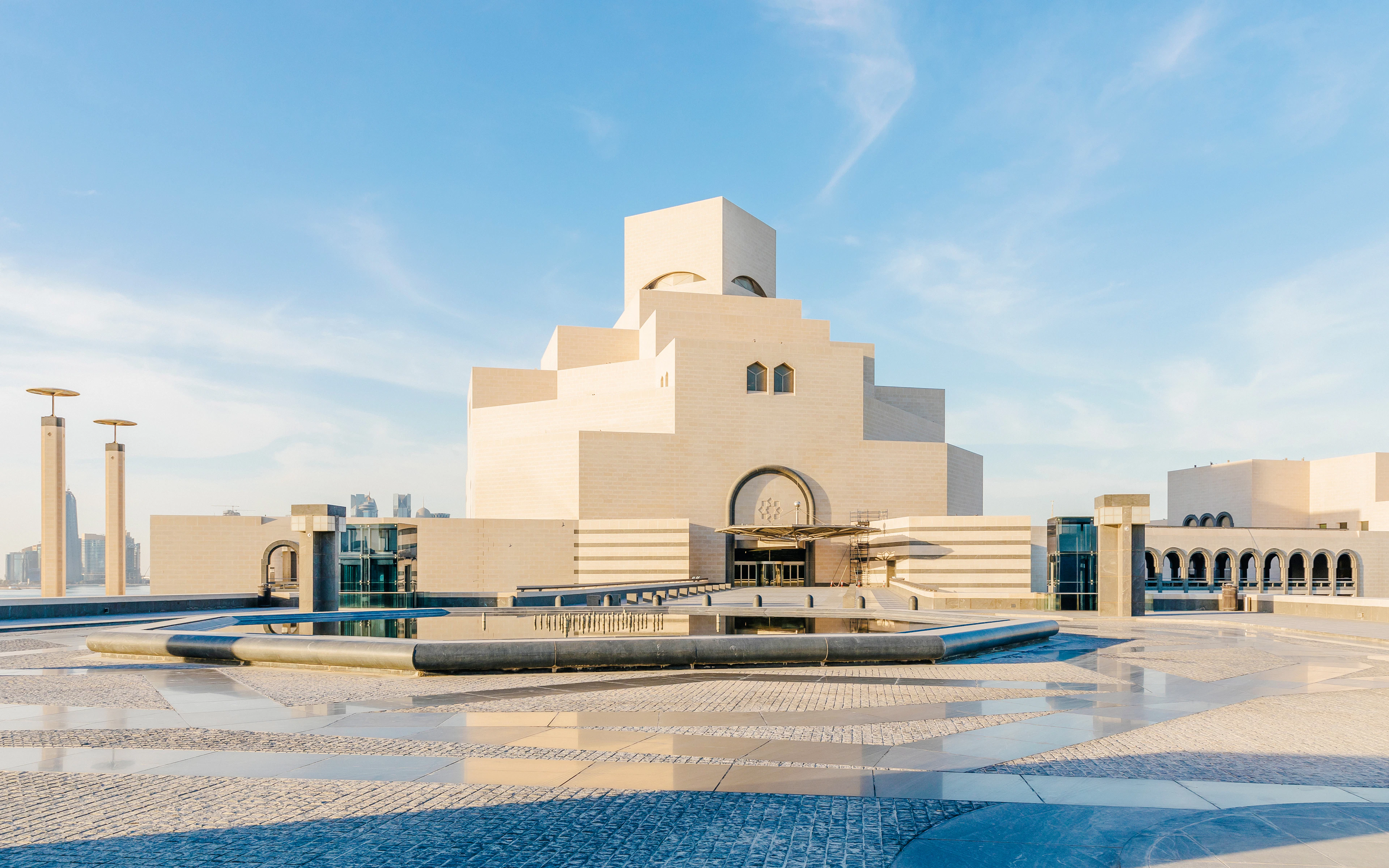
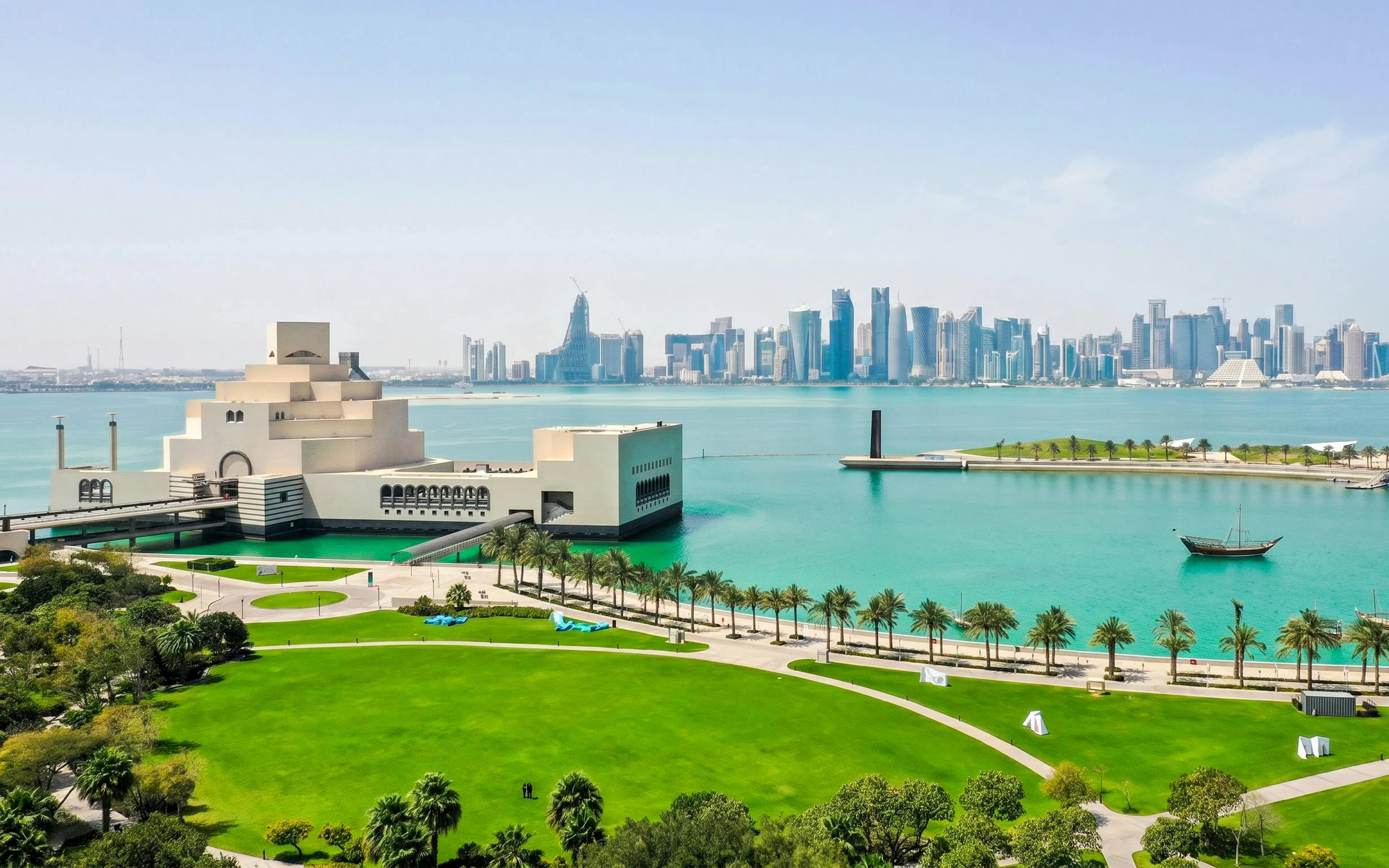
Enter Pei’s waterfront landmark
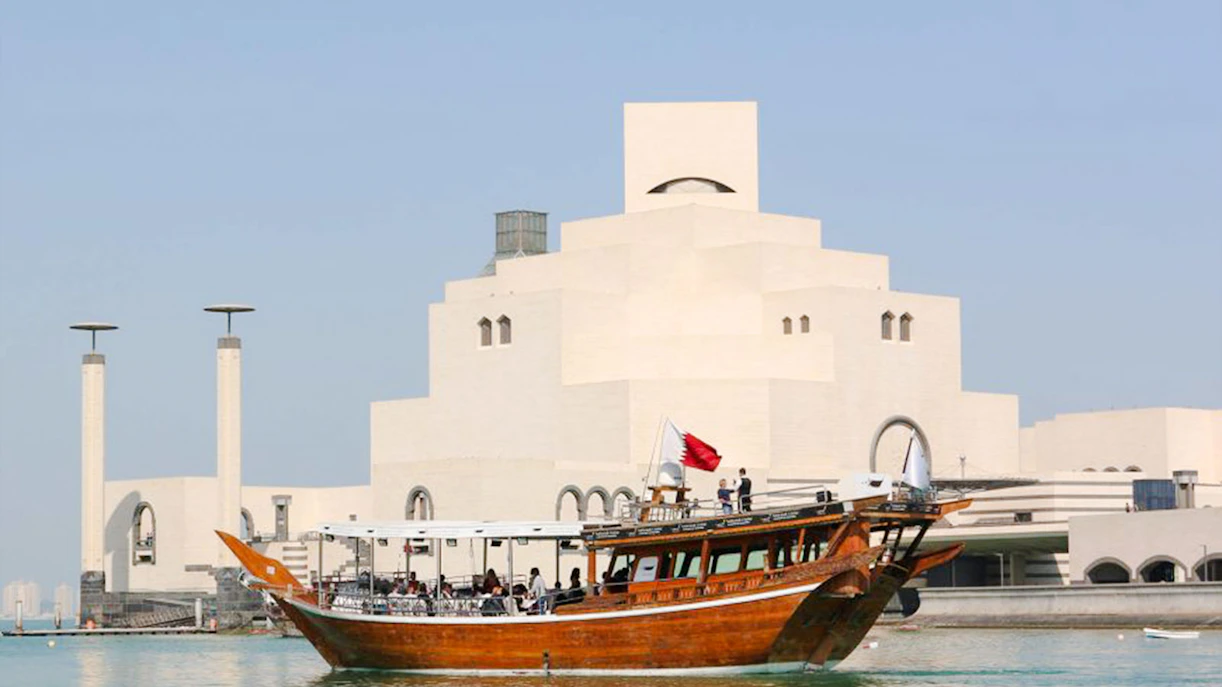
Approach I.M. Pei’s museum across its purpose-built waterfront site, then step into the grand domed atrium.
Follow the permanent galleries
Most visits begin in the permanent galleries, where objects span three continents and about 1,400 years.
Use the audio guide
The QR audio guide that is included in your adds context as you move through the galleries.
Pause at the bay window
One of MIA’s strongest payoff moments comes near the atrium at the 45-meter window facing Doha Bay.
See what’s currently on
Temporary exhibitions Included are worth checking before you head out.
Extend it into MIA Park
If you still have energy, continue into MIA Park and the waterfront promenade after the galleries.
Things to know before booking your Museum of Islamic Art tickets
Booking window
- Advance booking is usually optional for the Museum of Islamic Art Doha, since tickets can also be bought on arrival. No fixed public release window was verified, so booking ahead is mainly about locking in your date.
- This is not a scarce-access museum with frequent sell-outs. The bigger planning constraints are the weekly Wednesday closure and Friday opening from 1:30pm.
- Thursday is the only late-close day, with the museum open until 9pm. If you want gallery time plus a walk around MIA Park, book that window.
Entrances & flow
- All visitors enter through the main museum entrance and pass security first. Security applies to every ticket type and cannot be skipped.
- Pre-booked tickets mainly save you from buying a ticket at the counter. No dedicated fast-track or meaningful skip-the-line lane was publicly verified.
- The entry flow is simple: arrival, security screening, ticket validation or purchase, then gallery entry. Pre-booking helps with convenience, not major time savings.
What’s included
- Your ticket includes entry to the Museum of Islamic Art and access to all permanent and temporary exhibitions. You do not need a separate exhibition add-on.
- The current admission ticket also includes an audio guide accessed on-site by QR code. That makes the base ticket more useful for first-time visitors than entry alone.
- The ticket is valid for your selected visit date and allows single entry for that day. Re-entry after exit is not included.
Ways to explore
- The current bookable format is self-guided, so you can move at your own pace. It works well if MIA is a flexible 2–3 hour stop in your Doha plan.
- The included audio guide adds context without fixing you to a tour start time. That matters here because the collection spans 1,400 years across several regions.
- Museum-run walk-in gallery tours may be offered on fixed schedules, but this ticket doesn't include them. Choose them only if their timing fits your day.
Special access & upgrades
- No premium-access version was verified for this museum. If you see “skip-the-line” language elsewhere, it only refers to bypassing ticket purchase, since security still applies.
- The real choice at MIA is interpretation, not access tier. This ticket already includes the audio guide, so most visitors do not need an extra upgrade.
- MIA Park is next to the museum and pairs naturally with the visit, but it is not part of the museum ticket inclusion.
Policies
- An adult must accompany children under 16. Book accordingly if part of your group cannot enter independently.
- The museum is wheelchair accessible, with suitable access throughout the venue. This makes the standard admission ticket workable for most mobility needs.
- The museum is open daily except Wednesday, and Friday starts later than other days. Check the day-specific schedule before booking.
Explore Museum of Islamic Art
MIA Park
MIA Café
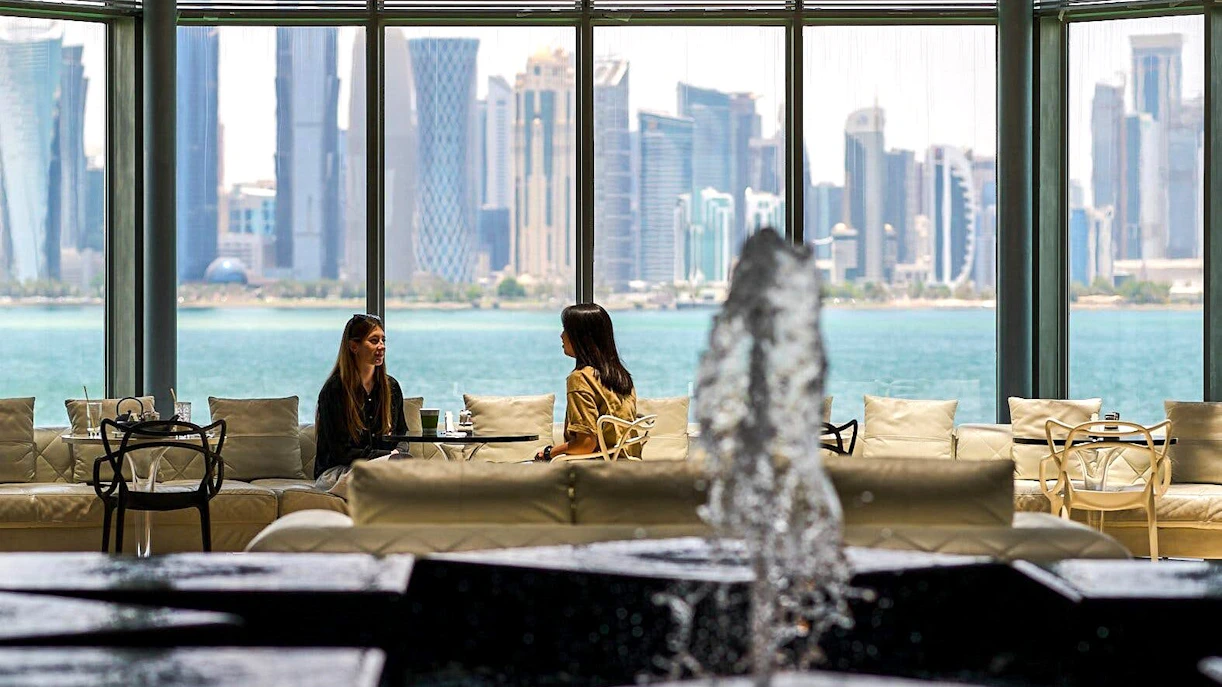
MIA Café is the easiest on-site pause if you want to break up a 2–3 hour museum visit without leaving the venue. It works well between the galleries and MIA Park, but it is a dining stop, not an attraction included with admission.
Access: Yes; on site; food and drinks cost extra
IDAM by Alain Ducasse
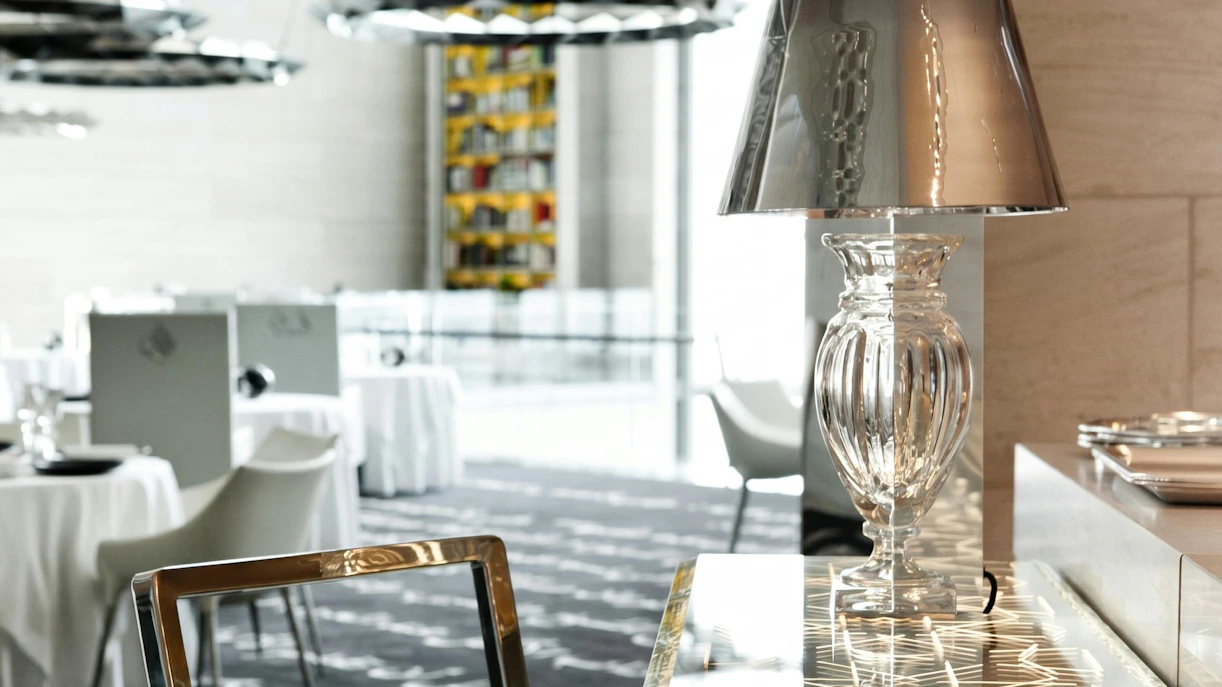
IDAM by Alain Ducasse is the museum’s top-floor restaurant and turns a standard gallery visit into a longer cultural outing. It is part of the MIA building, but dining is separate from museum admission and does not change your gallery access.
Access: Yes; separate restaurant within the museum; meal charges apply

Park Café
Park Café sits in MIA Park, outside the museum galleries, and suits visitors who want a lighter post-visit stop than a full restaurant meal. It pairs naturally with a waterfront walk, especially if you plan to extend your museum outing beyond the indoor visit.
Access: Yes; via MIA Park; food and drinks cost extra
Galleries at Museum of Islamic Art
Permanent Galleries - Main Collection Circuit
Chronological Survey – Upper Floors
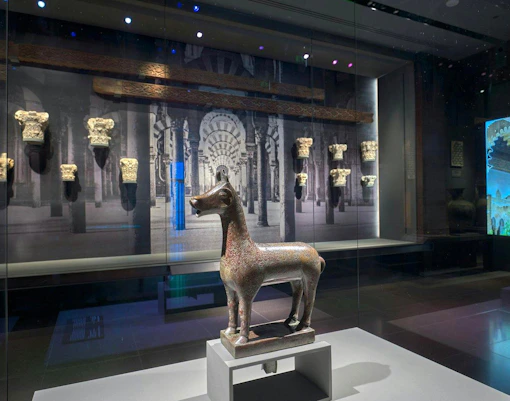
Set across the museum’s upper levels, the main circuit moves through objects from Spain to Central Asia and India. Start here for the broadest overview, then follow the loop into medium-based displays and quieter side bays.
Permanent Galleries – Manuscripts and Calligraphy
Qur’ans, Albums and Book Arts
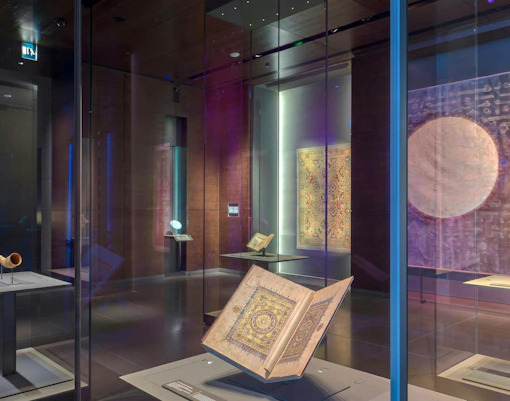
In this calmer stretch of the permanent route, illuminated manuscripts, Qur’ans, and calligraphic folios slow the pace. Cases are usually arranged for close reading, making this a natural mid-visit pause between denser object galleries.
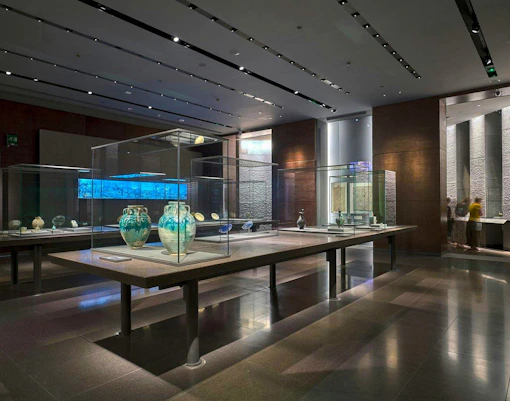
Permanent Galleries – Ceramics and Glass
Tableware, Tiles and Vessels
Grouped within the permanent galleries, this zone brings together glazed ceramics, carved rock crystal, and glassware from different Islamic courts. It works well early in the route, when you can compare shapes, surfaces, and regional styles side by side.
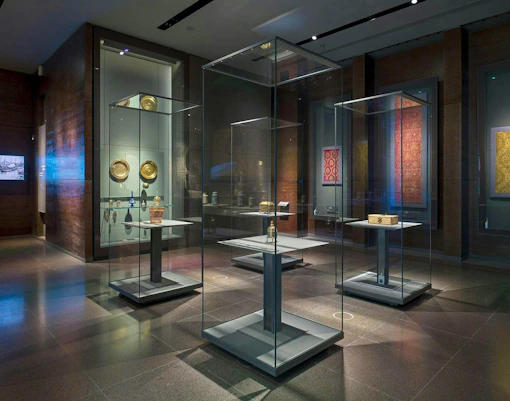
Permanent Galleries – Metalwork
Arms, Vessels and Court Objects
These cases gather brass, silver, and finely worked metal objects that often anchor the collection’s dynastic breadth. Expect a denser display rhythm here, usually along the main loop, before the route opens again into manuscript or textile displays.
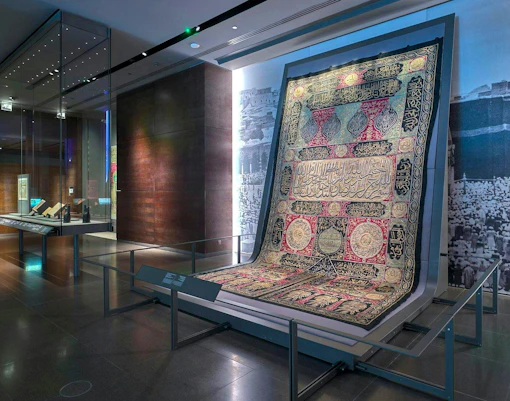
Permanent Galleries – Textiles and Carpets
Woven Arts and Court Dress
This quieter section shifts the visit from hard materials to fabric, pattern, and scale. Carpet displays and textiles are typically easier to browse at a slower pace, so many visitors use this part as a later-route detour.
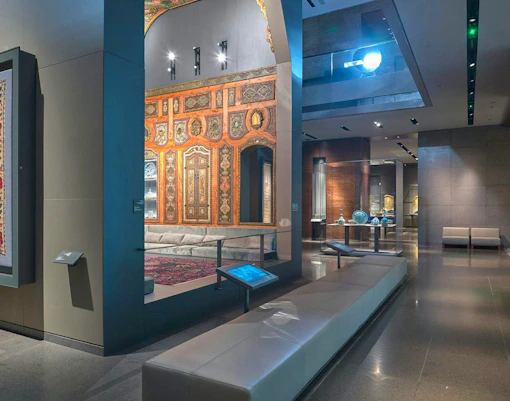
Permanent Galleries – Jewellery, Gemstones and Ivory
Precious Decorative Arts
Small-scale objects dominate this cluster, with jewellery, carved ivory, and precious materials displayed in compact cases. Look for it deeper into the permanent circuit, where the tighter presentation rewards a slower pass after the larger-form galleries.
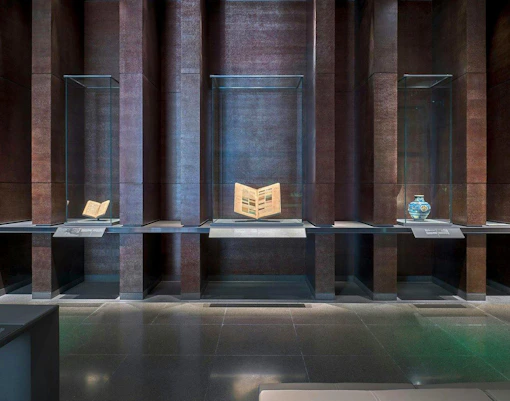
Permanent Galleries – Scientific Instruments and Coins
Astronomy, Measurement and Numismatics
Often tucked into more compact displays, this area covers scientific instruments, astrolabes, and coinage across several Islamic regions. It reads best as a focused stop near the end of the gallery sequence, rather than a standalone starting point.
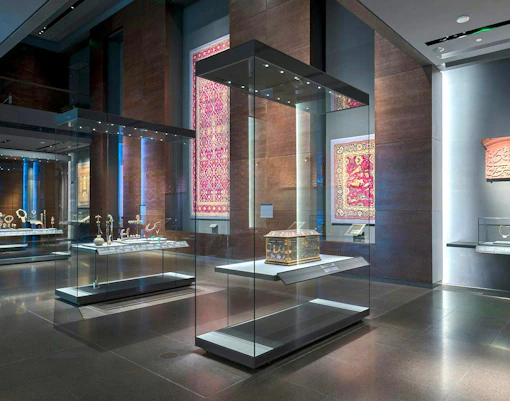
Special Exhibitions Gallery
Rotating Shows and Loan Displays
Separate from the permanent collection flow, this gallery hosts temporary exhibitions included with admission. Visit it after the main circuit if you want context first, or start here if a current show is your main reason for coming.
Must-see artworks at the Museum of Islamic Art
1/10
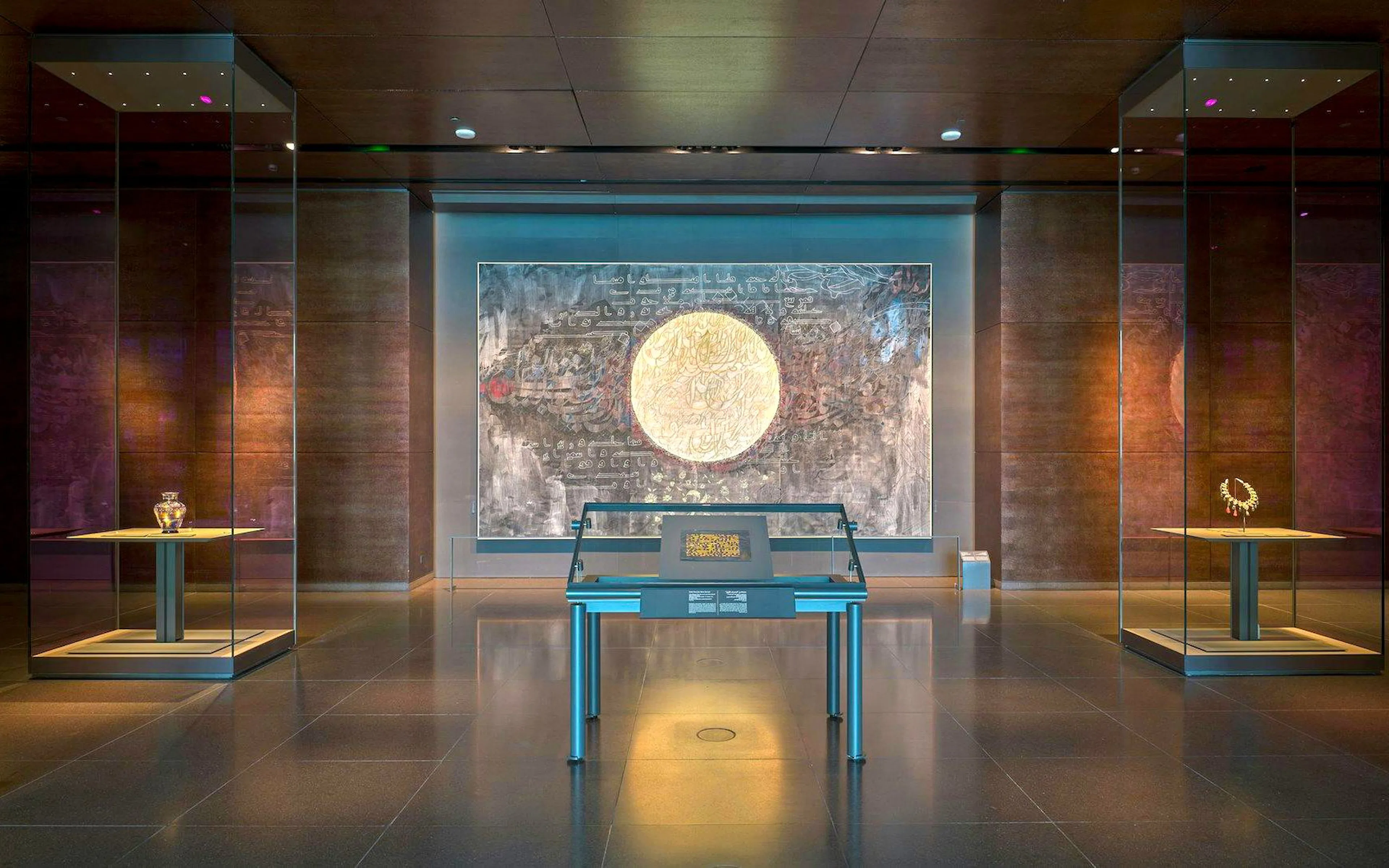
Folio from the Blue Qur'an
A landmark Qur'an manuscript known for its rare blue parchment. Notice the gold Kufic lettering, whose wide spacing makes each line feel solemn and architectural.
The Cavour Vase
This large Iranian ceramic turns courtly life into a wraparound narrative. Follow the riders, musicians, and dense ornament that keep the surface moving.
Basin with Polo Players and Hunters
A standout of courtly metalwork, filled with mounted games and hunters. Scan the circular bands to see action unfold scene by scene.
Turban Helmet
This helmet shows how armor could project status as well as protection. Look for the flared shape, bold calligraphy, and finely worked surface.
Talismanic Shirt
Covered with Qur'anic verses, prayers, and magic squares, this shirt blends devotion and protection. Trace how tiny writing turns the garment into a spiritual shield.
Jade Flask
A Mughal luxury object prized for its pale stone and controlled carving. Notice the smooth body, tight symmetry, and how light sharpens the jade's edges.
Lion-shaped Incense Burner
This functional piece brings wit to art with pierced openings and a stylized mane. View its form in separate parts to appreciate the design.
Mihrab
A prayer-niche panel that brings architectural beauty to the gallery. Focus on its layered geometry and inscription bands.
Brass Astrolabe
This instrument turns astronomy into elegant design. Notice the fine engraving and layered discs crafted to calculate time and direction.
Folio from the Shahnameh
Persian manuscript painting at its most refined. Study the crowded colors and steep rocks that create a vivid stage for a heroic tale.
Plan your visit to Museum of Islamic Art Doha
Timings
- Opening hours: Sundays, Mondays, Tuesdays, and Saturdays run from 9am–7pm.
- Thursday hours: Thursdays run from 9am–9pm.
- Friday hours: Fridays run from 1:30pm–7pm.
- Weekly closure: The museum is closed on Wednesdays.
- Visit length: Most visits take about 2–3 hours.
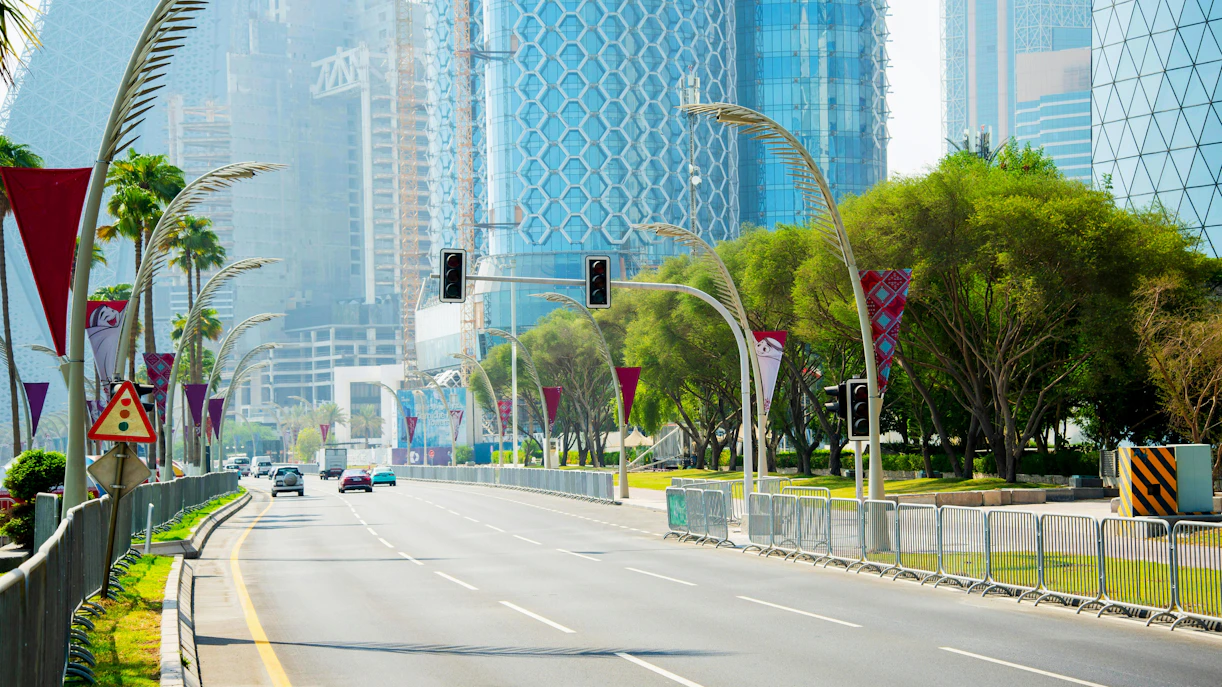
Location
- Address: Off Al Corniche St, Doha, Qatar | View on Google Maps
- Setting: The museum sits on Doha’s Corniche beside MIA Park.
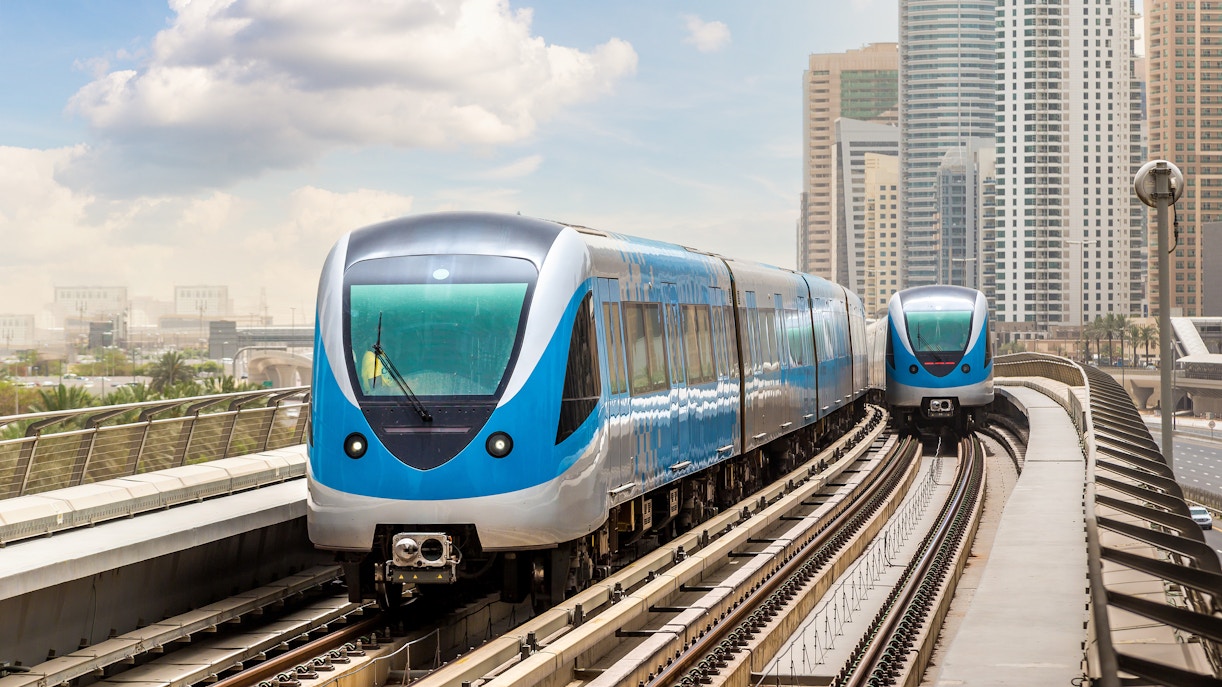
Getting there
- Metro: The Gold Line stops at Qatar National Museum Station.
- Shuttle: Free shuttle buses serve the museum.
- Taxi: Taxis and rideshares can drop you at the main entrance.
- Car: On-site parking is available.
Facilities
- Restrooms (ladies’ restrooms include changing tables)
- Dining
- Library
- Gift shop
- Separate men's and women's prayer rooms
- Free Wi-Fi
- Lost and found

Accessibility
- Wheelchair access: The museum is wheelchair-accessible.
- Mobility aids: Limited number of wheelchairs are available at the Visitor Service Desk
- Route detail: Public step-free route maps are provided.

Dress code
- Clothing: Shoulders and knees should be covered.
- Enforcement: Entry may be refused if clothing is unsuitable.
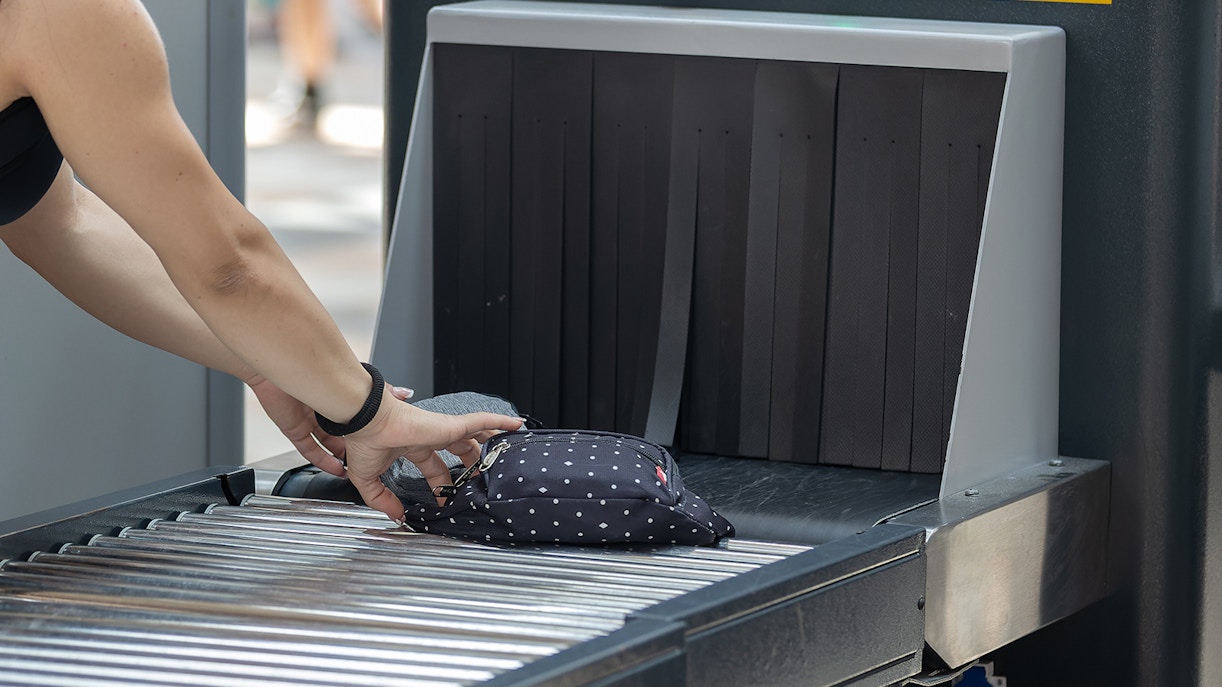
Rules
- Bag policy: All bags are subject to security screening.
- Photography: Personal photography is usually allowed.
- Equipment: Flash, tripods, and selfie sticks are prohibited.
- Food and drinks: Should stay within dining areas.
- Behavior: Keep noise low; children must stay with an adult.
- Re-entry: Tickets are valid for single entry.
- Filming: Requires advance approval.
Visitor tips & guidelines
- Start in the permanent galleries, not MIA Park; indoor focus lands better before heat and skyline pauses dilute attention.
- Keep the exterior approach until just before the main museum entrance; the isolated island siting reads best as one uninterrupted sequence.'
- Pause in the main atrium before your first gallery; the compressed entry opens suddenly, making the geometry easier to read.
- Stand on the centerline of the 45-meter window overlooking Doha Bay; the opening frames the skyline most evenly there.
- Leave temporary exhibitions until after the permanent galleries; the broader collection gives the historical range that rotating shows assume.
- On Thursdays after 5pm, finish inside before stepping into MIA Park; later light gives the waterfront extension more payoff.
- Use MIA Café between the permanent galleries and the 45-meter window; a seated break restores attention for denser displays.
- Skip weekend parking if MIA Park has major events; the museum parking area fills quickly and can disrupt entry rhythm.
Frequently asked questions about Museum of Islamic Art Doha tickets
Usually no. Tickets are available on arrival, so this is not typically a sell-out museum. Booking ahead still helps if you want your visit date set in advance and would rather skip the ticket-purchase step.
The standard ticket is tied to your selected visit date and stays valid for that day. It does not confirm a strict minute-by-minute entry slot, so plan around museum opening hours.
No. Pre-booking may only save the ticket-purchase step; all visitors still go through security screening, and no dedicated fast-track access is provided.
No, re-entry is not automatically included. Your ticket is valid for the selected visit date only.
Yes. Standard entry covers the permanent galleries and temporary exhibitions, including the audio guide via QR code. No separate upgrade is necessary.
This ticket is self-guided; it includes audio commentary by QR code, offering flexible pacing.
Yes, the audio guide is included with the standard ticket and accessed on-site by QR code. Language details should be checked separately.
MIA Park is adjacent to the museum and complements the visit, but is not included in the indoor ticket.
The museum is open Sundays, Mondays, Tuesdays, and Saturdays from 9am–7pm; Thursdays from 9am–9pm; and Fridays from 1:30pm–7pm. It is closed on Wednesdays.
Weekday mornings are usually the calmest, with Thursday late afternoons as a good alternative.
No clear last-entry cutoff is specified. It's advisable to arrive well before closing.
Plan for about 2–3 hours inside the museum to fully experience the galleries and exhibitions.
Ticket terms do not guarantee cancellation or rescheduling; check product terms before booking.
Yes, the museum is wheelchair-accessible, and children under 16 must be accompanied by an adult.
Yes. Shoulders and knees should be covered, and entry may be refused for inappropriate attire.