
Experience the best of National Museum of Qatar

Crafted by Headout, a global experiences brand offering curated tours, tickets & experiences. Discover with ease, book with peace.
Loved by over 55 million guests worldwide


How Headout makes choosing experiences effortless

We curate the best ways to experience

We research and organise all unique experiences - from tickets to tours to special combos - so you get all the choices without the clutter.

We partner with the best

Every supplier is vetted for quality, reliability, and value so you only get top rated experiences. No surprises, no disappointments.

All the best options, in one place

Each experience is thoughtfully organised to give you maximum availability, great value and an easy way to choose.

Book with complete peace of mind

Free cancellations, Flexible payments, and 24/7 support - thoughtfully designed for flexibility, assurance, and total peace of mind.

Slide 1 of 4

Slide 1 of 4

National Museum of Qatar: Quick overview

  • Ticket options: National Museum of Qatar tickets include dated general admission, access to all open permanent and temporary galleries, and a QR audio guide; this is a self-guided visit, not a guided tour.

  • Additional access: No extra sites, partner museum combos, or transport add-ons are included in this National Museum of Qatar collection.

  • Unique experiences: No early-access, night visit, private tour, or restricted-room format is currently sold here; the main differentiator is flexible self-paced entry with audio commentary.

  • Queues & access: This is prepaid admission, not skip-the-line access; it may avoid the onsite ticket counter, but ticket checks and security screening still apply, with no published priority lane.

  • When to book: Demand is usually highest from October to February and on weekends; book a weekday morning slot for quieter galleries, especially if you're visiting during winter or holidays.

  • Good to know: Entry is single-use on your selected date; last entry is 45 minutes before closing, Tuesdays are closed, and children under 16 must be accompanied by an adult.

What to expect at National Museum of Qatar

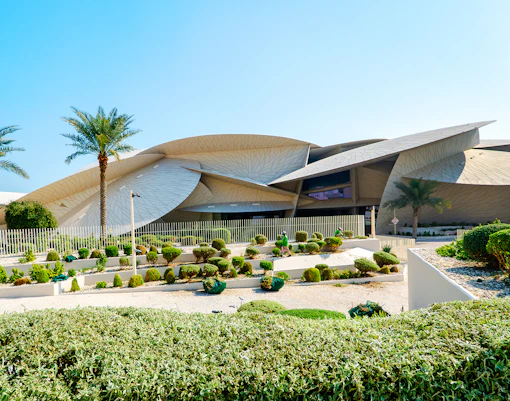
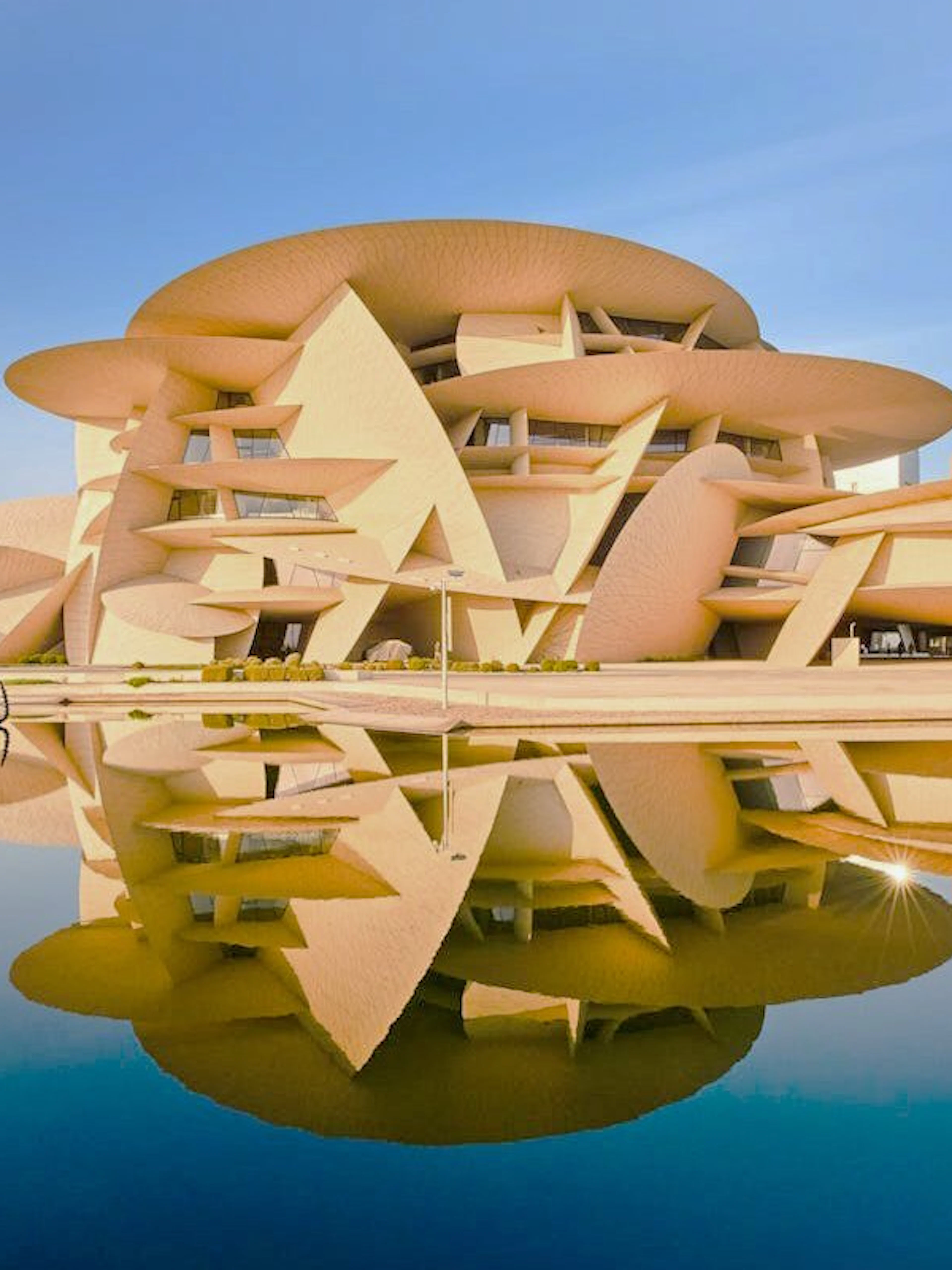
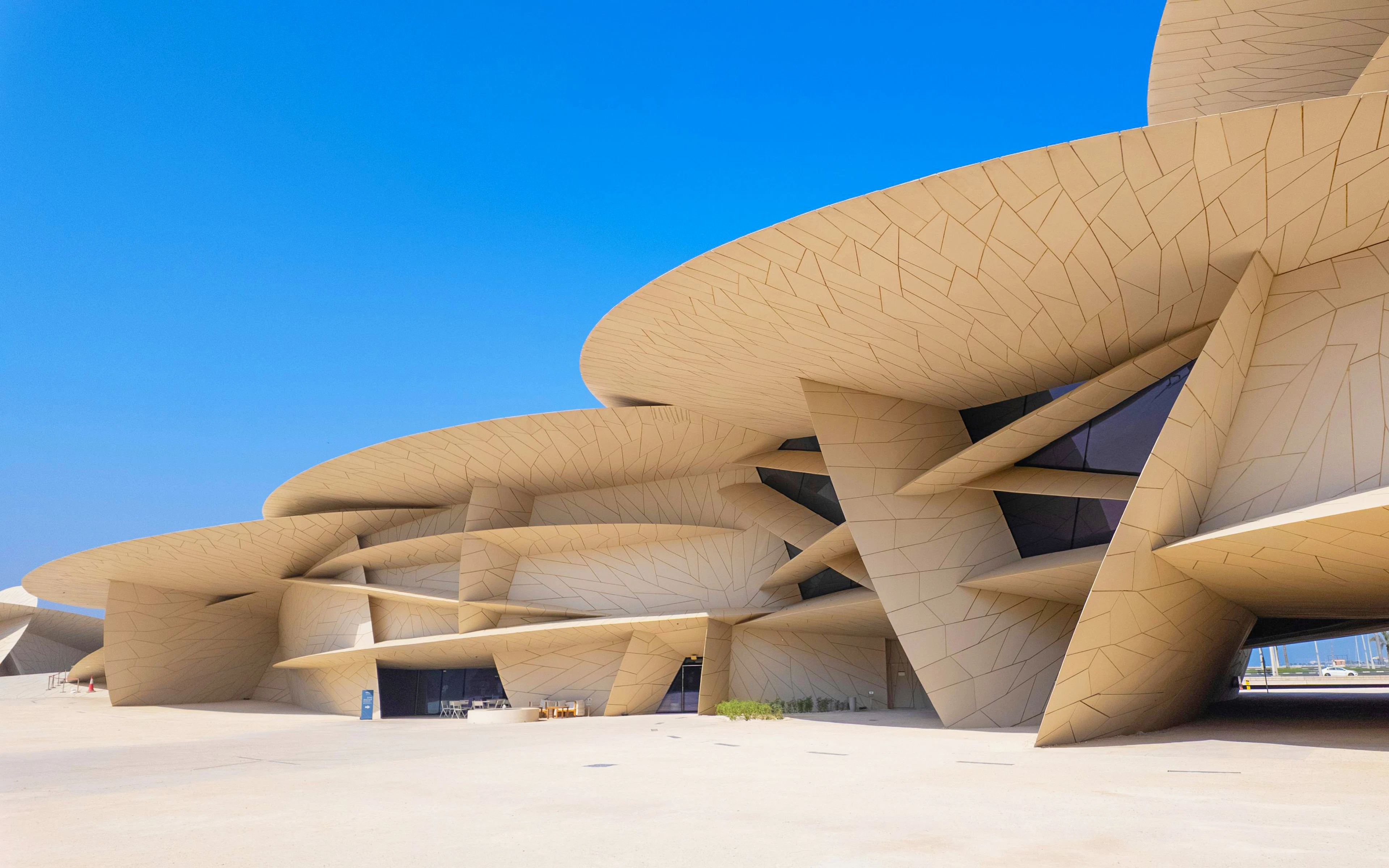
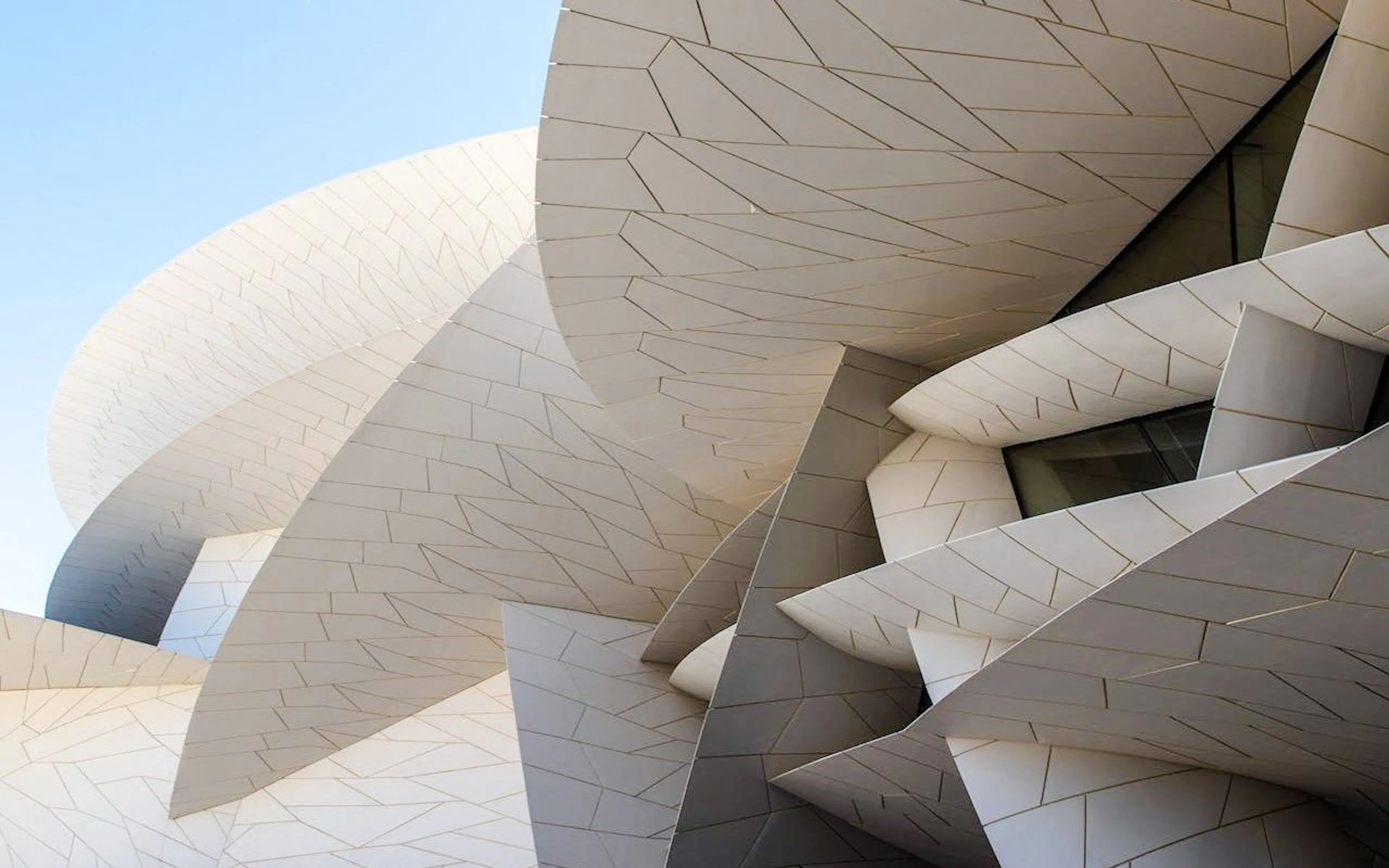
National Museum of Qatar's intricate architectural design in Doha.
1/6

Enter the desert rose

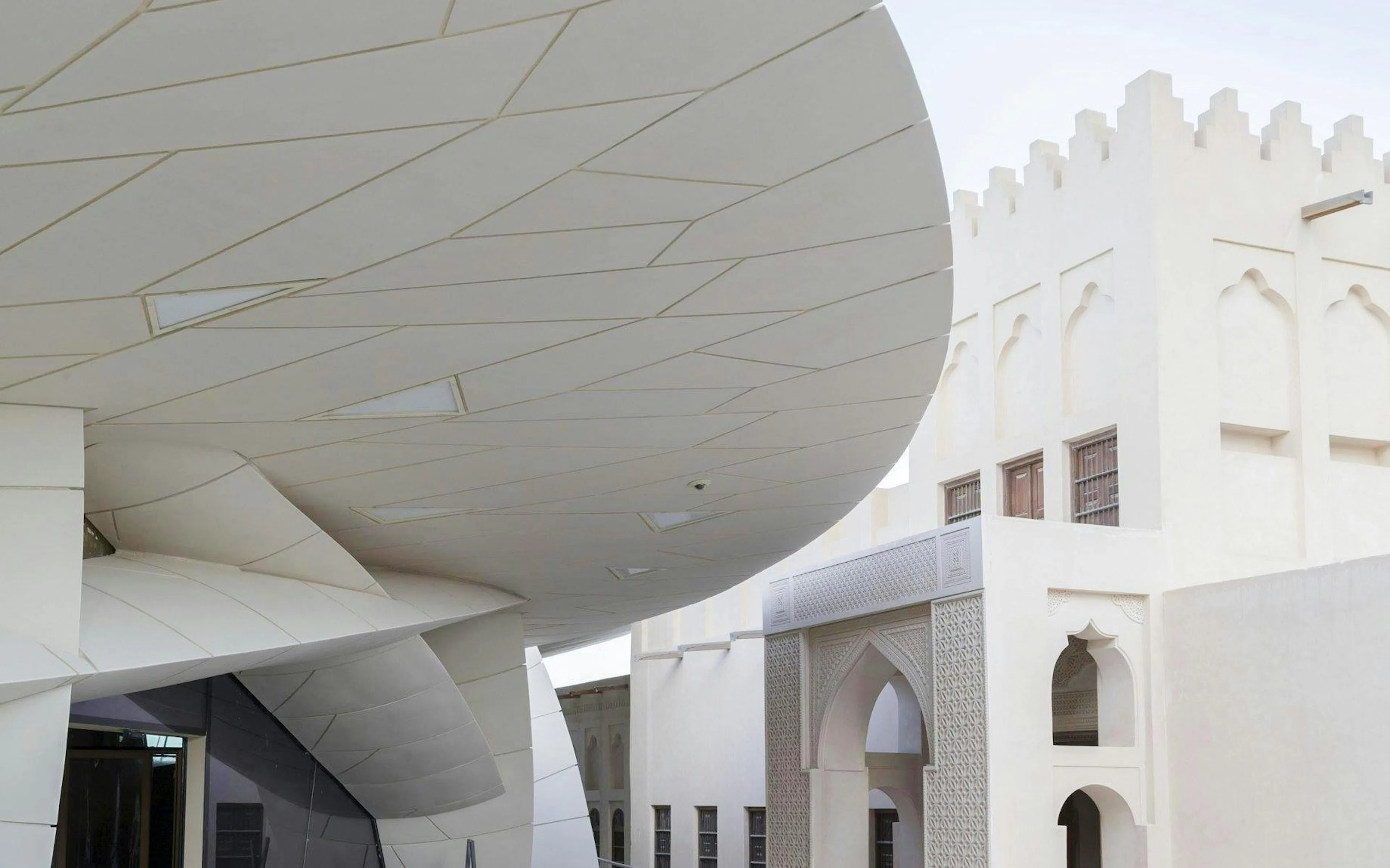
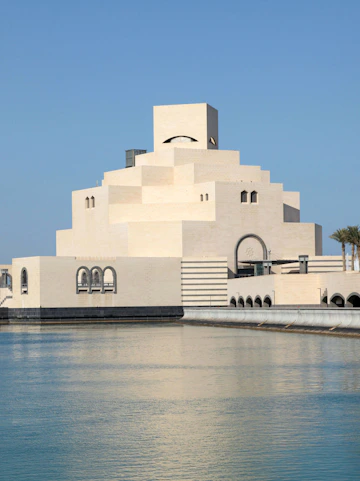
Step into Jean Nouvel’s desert-rose-inspired museum, where interlocking discs shape the first impression. Inside, the museum’s 11-gallery story unfolds chronologically, though some permanent galleries are currently closed for enhancement, and the building itself keeps the narrative feeling immersive.

Begin before human history

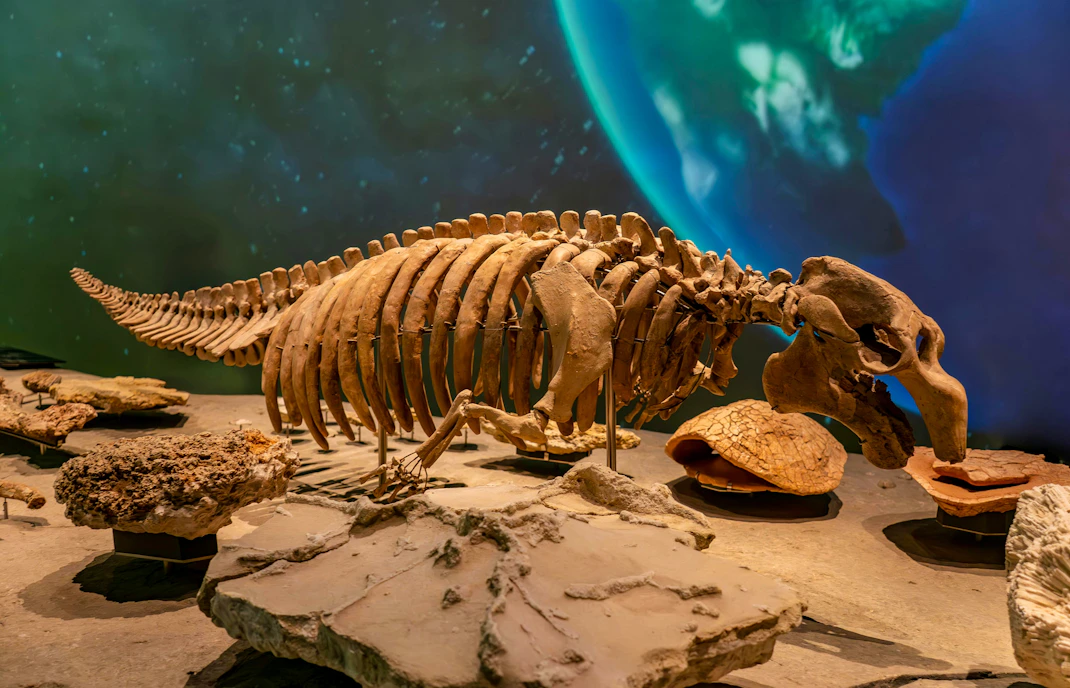
The route opens with the peninsula’s formation, fossils, and desert-to-sea ecosystems. Look up for the suspended life-size whale shark model; families often linger 30–45 minutes here, especially at the interactive displays and large-format film sequences.

From camps to coast

Next, archaeology gives way to Bedouin and coastal life. Reconstructions tied to Al Jassassiya and Al Kassar, pearl-diving material, dhow trade, and oral histories explain how movement between desert and sea shaped everyday life before oil.

The palace payoff

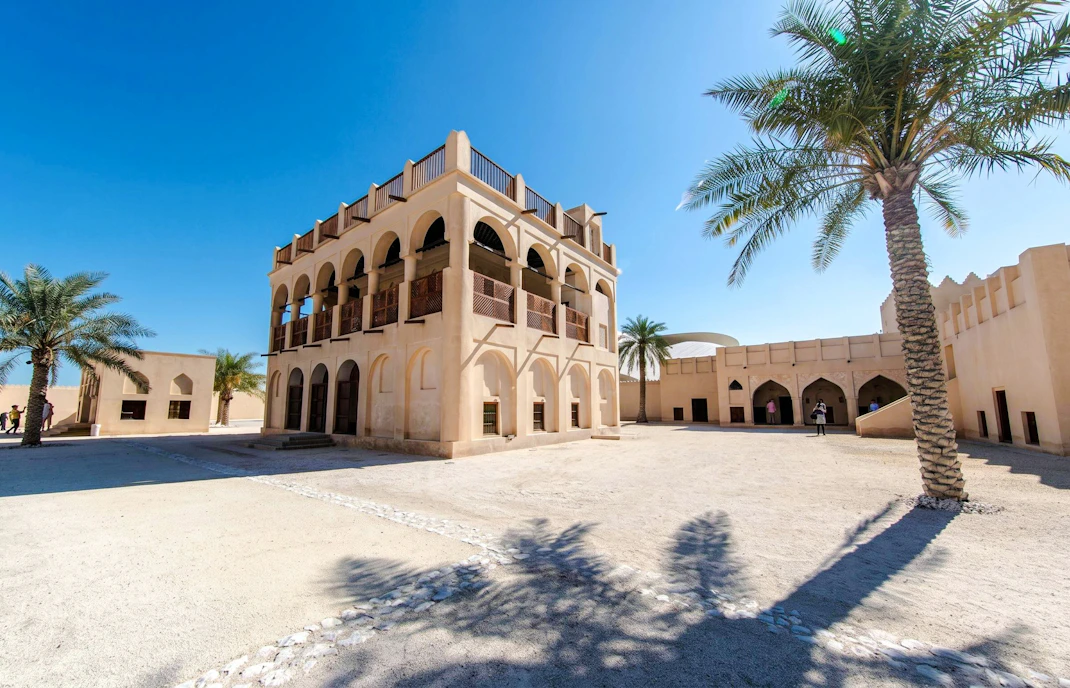
At the centre, the restored Old Palace of Sheikh Abdullah bin Jassim Al Thani changes the pace. Traditional rooms and courtyards counter the multimedia galleries, while highlights can include the Pearl Carpet of Baroda, subject to current gallery closures.

Modern Qatar, with context

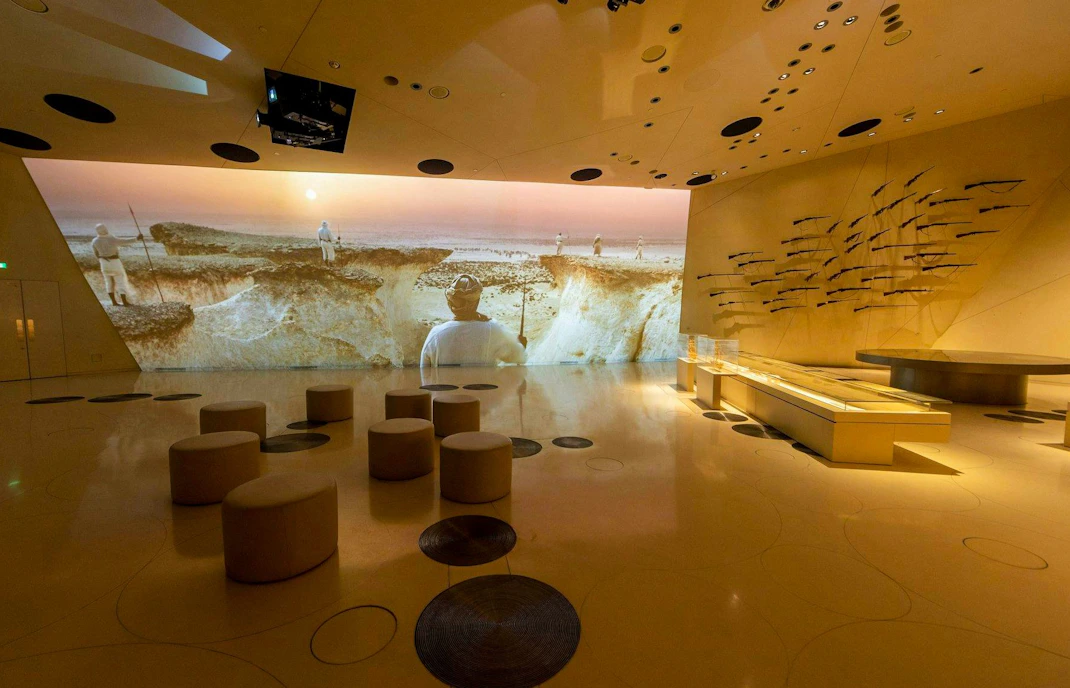
The final chapter moves through oil, state formation, and contemporary Qatar with large projections and archival material. Unlike label-heavy museums, the QR audio guide Included keeps the 1.5-kilometre route easier to follow and adds context without backtracking.

Linger beyond the galleries

Before you leave, browse the design-led gift shop or step out for another look at the interlocking discs. Temporary exhibitions Included are part of admission, subject to current gallery closures, and can add something new beyond the core 11-gallery story.

Things to know before booking your National Museum of Qatar tickets

Booking window

  • No long advance-release window is documented for this ticket. Most visits can be booked close to the date, but weekends and holiday periods are better booked ahead for confirmed entry.
  • This museum usually has lower sell-out pressure than headline mega-museums. Prebooking mainly helps you avoid onsite ticketing uncertainty, especially if you're fitting the visit into a short Doha stop.
  • Some permanent galleries are temporarily closed for enhancement until 30 December 2026. Book with the expectation of partial gallery access rather than the full permanent route.

Entrances & flow

  • This listing is standard prepaid admission, not a skip-the-line product. You should still expect normal ticket validation and any security screening in place at entry.
  • The main visitor entrance is on Museum Park Street. If you arrive by car, onsite parking is available, and the venue also supports access by public transport.
  • There is no hosted-entry service included with this ticket. You enter independently rather than meeting a representative outside.

What’s included

  • Your ticket includes entry to the National Museum of Qatar on the selected date. Access covers all open permanent galleries and temporary exhibitions available at the time of visit.
  • A QR-code audio guide is included. That matters here because the museum’s 11-gallery route is large, chronological, and easier to follow with built-in commentary.
  • This ticket does not include a guided tour. Food, drinks, and other paid onsite add-ons are separate.

Ways to explore

  • This is a self-guided ticket, so you can move at your own pace. Most visitors spend around 2–4 hours, while architecture-focused visits can be shorter.
  • The included audio guide adds structure without locking you into a fixed tour time. It is the best fit if you want context but still want the flexibility to pause at films, interactive displays, or the Old Palace.
  • If you want a guide-led route, this listing is not that format. Choose it only if independent exploration suits your travel style.

Special access & upgrades

  • This ticket does not include skip-the-line access, hosted entry, or a guided tour. It is the museum’s basic admission format with audio guide support.
  • This ticket also does not guarantee access to any specific gallery or object while enhancement work continues. If you are visiting for a particular highlight, confirm that its gallery is currently open before booking.

Policies

  • Children under 16 must be accompanied by an adult. This is important if you are booking separate child entries within a family visit.
  • The museum is open daily except Tuesdays. Thursday usually has extended evening hours, and last entry is 45 minutes before closing.
  • The venue is wheelchair accessible. This ticket works for most accessible visits, though some gallery floors may feel uneven because of the building’s design.

Explore National Museum of Qatar Checked: August 2026

At the heart of the National Museum of Qatar, the restored Old Palace anchors Jean Nouvel’s newer structure with a lived piece of Qatari history. It was once a royal residence and seat of government, and forms an important stop in the museum sequence.

Access: Yes — included with museum admission, subject to current gallery availability

NMoQ Park surrounds the museum with landscaped paths, a lagoon, and public art beyond the indoor route. It’s the easiest way to extend your visit without more gallery time, and one of the best places to photograph the desert-rose architecture from different angles.

Access: Yes — separate ticket not noted in the provided inputs

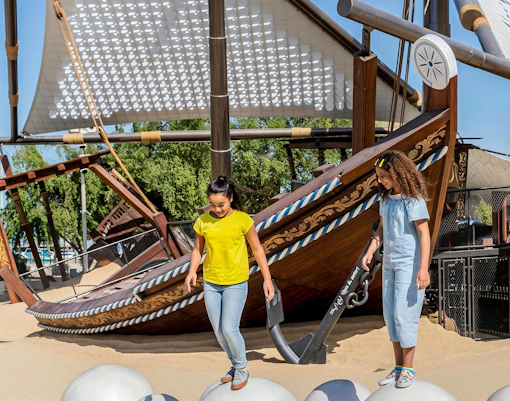
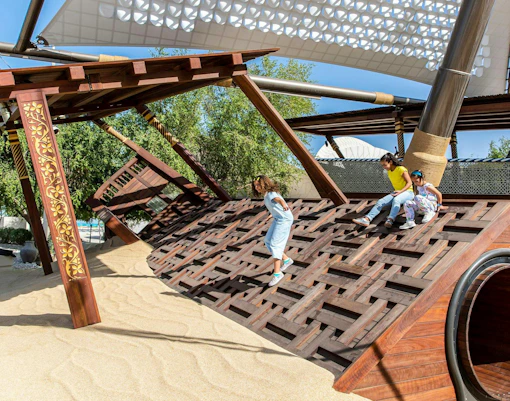
Set within NMoQ Park, the family playgrounds echo museum themes through outdoor play elements linked to pearl trading and Qatar’s energy story. They work well as a break before or after the galleries, especially on longer family visits in cooler months.

Access: Yes — separate ticket not noted in the provided inputs

Jiwan, on the museum’s fourth floor, is a distinct add-on rather than part of the exhibition visit. Many visitors time it after the galleries for terrace views over Doha Bay and the skyline, especially during late afternoon and sunset hours.

Access: No — dining is separate; reservations may be needed in peak periods

  • Metro: Take the Doha Metro Gold Line to National Museum Station, then walk 8 minutes.
  • Airport transfer: Hamad International Airport is around 15–20 minutes away by taxi or ride-hail.
  • Parking: Free on-site parking is available at the Museum Parking Lot.
  • Shuttle: Accessible golf carts connect the parking area and main entrance.

Galleries at National Museum of Qatar

Beginnings

Geology and early formation of Qatar

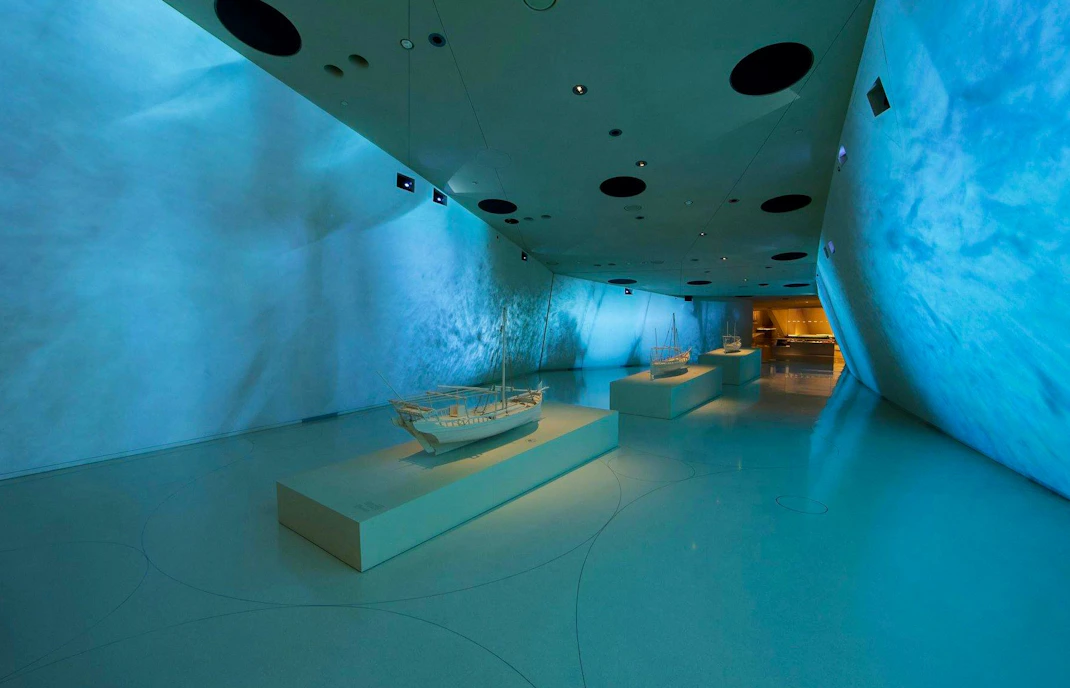
The route opens with projected landscapes, fossils, and geological displays that explain how the peninsula formed. These entry galleries set the museum’s chronological flow, moving visitors through dim, curving spaces before human history begins.
Natural History

Desert and marine environments

Early in the route, immersive halls focus on Qatar’s desert and coastal ecosystems through specimens, models, and large-format media. This section broadens the geological introduction before the path narrows into archaeology and the first human settlements.

Archaeology of Qatar

Prehistoric camps, settlements, and excavated objects

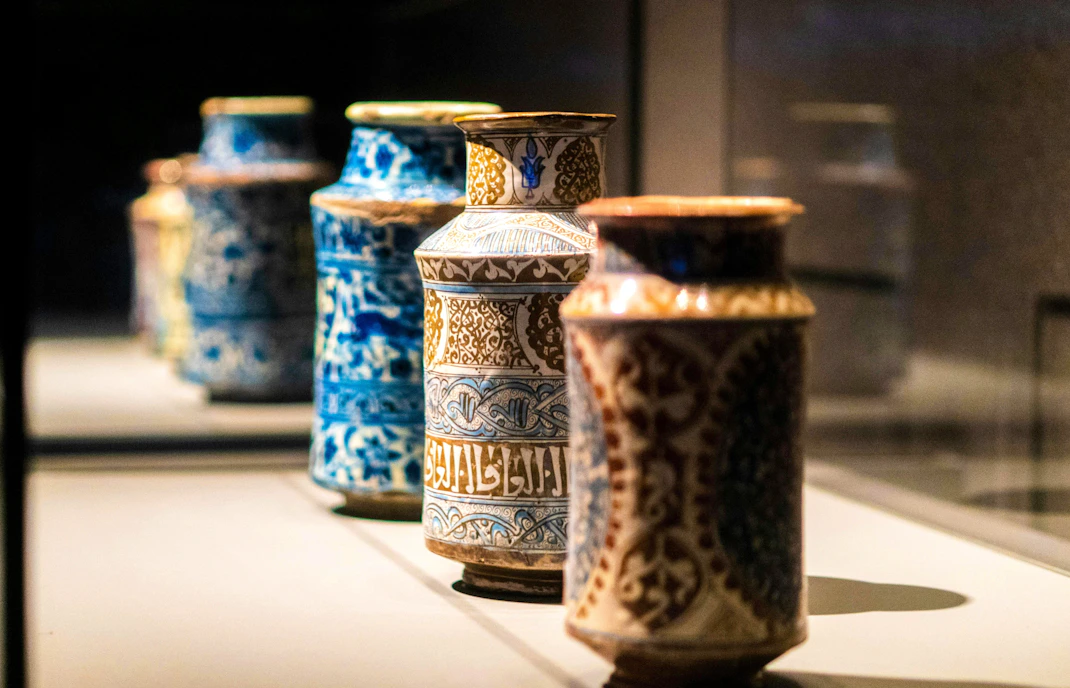
Midway through the opening chapter, this quieter cluster gathers archaeological finds, rock-carving reconstructions, and settlement material from across the peninsula. Labels and films connect isolated objects to wider landscapes before the narrative shifts toward nomadic and coastal life.

Life in Qatar

Bedouin heritage, coastal settlements, and pearling culture

The middle stretch of the museum traces everyday life through tents, costumes, oral histories, fishing, dhow trade, and pearl diving. Connected rooms move visitors between desert and shore, making this the clearest bridge between landscape and lived experience.

The Modern History of Qatar

Oil era, state formation, and contemporary identity

The final gallery sequence turns to oil, institutions, and recent national development through archival material, film, and interactive displays. It sits near the end of the route, where the museum’s historical arc connects most directly with present-day Doha.

Palace of Sheikh Abdullah bin Jassim Al Thani

Historic palace rooms and state residence

At the museum’s core, the restored palace interrupts the multimedia route with courtyards and traditional rooms once used by Qatar’s ruling family. Many visitors save extra time here, since it works as both a spatial pause and historical endpoint.

Must-see artworks at National Museum of Qatar

National Museum of Qatar's modern architecture with traditional design elements.
1/13

Desert Rose Building

Jean Nouvel (2019)

  • Location: Exterior and central courtyard
  • Landmark architecture turning Qatar's desert rose crystal into a walk-through form. Notice how the intersecting discs shape light, shade, and constantly changing sightlines.
  • Pro tip: Walk the perimeter before entering to see the disc geometry shift.

Palace of Sheikh Abdullah bin Jassim Al Thani

  • Location: Old Palace
  • Historic core of the museum and former seat of government. Look for the contrast between simple courtyard rooms and the dramatic contemporary shell around them.
  • Pro tip: Pause in the courtyard before the final rooms to feel the scale change.

Pearl Carpet of Baroda

  • Location: Permanent galleries
  • Ceremonial textile linking Gulf pearling wealth with Indian patronage. Look closely at the dense pearl surface and jewel clusters that turn the carpet into patterned light.
  • Pro tip: Step back first, then move closer to see the pearl density.

Al Zubarah Qur'an

  • Location: Permanent galleries
  • Rare manuscript tied to Qatar's trading past and Islamic scholarship. Notice the disciplined page layout and the measured rhythm of the handwritten lines.
  • Pro tip: Stand slightly back to read the page layout before focusing on details.

Whale Shark Model

  • Location: Natural environments galleries
  • A life-size cue to Qatar's marine world and family-friendly storytelling. Look at its suspended scale overhead; it quickly shifts the museum from history to habitat.
  • Pro tip: Look up from directly below to feel its true size.

Archaeological Objects from Qatar

  • Location: Archaeology galleries
  • Around 1,000 objects trace human presence from camps to trading towns. Notice how materials, finish, and scale change as settlement life becomes more permanent.
  • Pro tip: Scan one case first, then compare earlier and later finds.

Al Jassassiya Rock-Carving Reconstruction

  • Location: Archaeology galleries
  • This reconstruction brings Qatar's landscape markings indoors. Study the repeated carved motifs and how simple lines record movement, memory, and place.
  • Pro tip: Compare the full slab first, then inspect individual markings.

Al Kassar Rock-Carving Reconstruction

  • Location: Archaeology galleries
  • A companion to Al Jassassiya, this reconstruction broadens the archaeological story. Notice how the markings feel both functional and symbolic when seen up close.
  • Pro tip: View from the side to catch shallow carved lines.

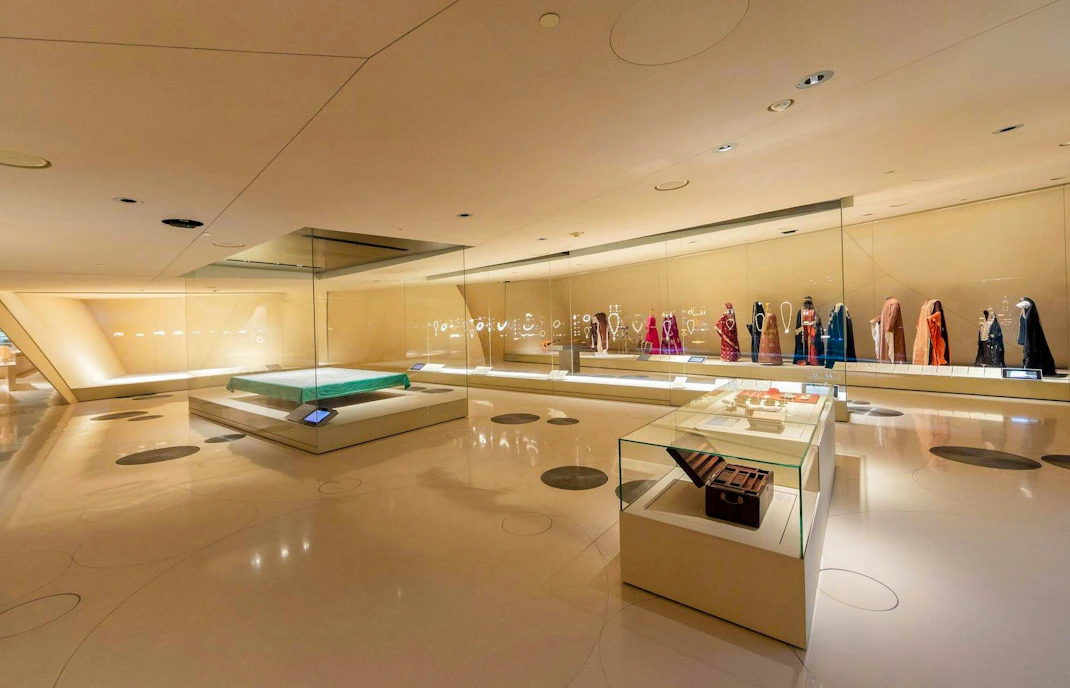
Historic Qatari Jewelry

  • Location: Heritage galleries
  • These pieces show status, craft, and ceremonial dress traditions. Look for fine metalwork, repeated motifs, and how ornament balances weight with delicacy.
  • Pro tip: Look from two angles to see how metalwork catches light.

Historic Costumes

  • Location: Heritage galleries
  • These garments ground the museum's story in daily and ceremonial life. Notice embroidery, layering, and how color and texture signal region, occasion, and identity.
  • Pro tip: Step back to read the silhouette before studying embroidery.

Pearl-diving Equipment

  • Location: Pearling Heritage Galleries
  • This material explains pre-oil livelihoods through tools used at sea. Look for wear marks and practical design choices shaped by risk, depth, and repetition.
  • Pro tip: Lean in for the small functional details, then step back for the full kit.

Traditional Bedouin Tent

  • Location: Bedouin heritage galleries
  • This display explains mobility, shelter, and family life before urban expansion. Notice the structure's simplicity and how space is organized for climate and daily routines.
  • Pro tip: Stand at the edge first to understand the structure's proportions.

Oil Discovery Archival Materials

  • Location: Modern history galleries
  • These displays compress one of Qatar's biggest turning points. Look for the shift from intimate archival material to large projections that mirror rapid national change.
  • Pro tip: Watch the full projection cycle before moving on.

Plan your visit to National Museum of Qatar

  • Sunday, Monday, Wednesday, and Saturday: The museum is open from 9am–7pm.
  • Thursday: The museum is open from 9am–9pm.
  • Friday: The museum is open from 1:30pm–7pm.
  • Closed day: The museum is closed on Tuesdays.
  • Last entry: Entry ends 45 minutes before closing.
  • Gallery access: Some permanent galleries are closed for enhancement through December 30, 2026.
  • Address: Museum Park Street, Off the Corniche, Doha, Qatar | Getting there
  • Setting: The museum sits at the southern end of the Doha Corniche.
  • Metro: Take the Doha Metro Gold Line to National Museum Station, then walk 8 minutes.
  • Airport transfer: Hamad International Airport is around 15–20 minutes away by taxi or ride-hail.
  • Parking: Free on-site parking is available at the Museum Parking Lot.
  • Shuttle: Accessible golf carts connect the parking area and main entrance.
  • Audio guide: The museum audio guide is available through a QR code.
  • Dining: Jiwan restaurant serves meals from the fourth-floor terrace.
  • Cafés: Additional cafés and kiosks are available around the museum complex.
  • Shops: Gift shops sell books, souvenirs, and family-friendly items.
  • Bag storage: Large bags must be checked before entering gallery spaces.
  • Outdoor spaces: The site includes a park, lagoon, and family playgrounds.
  • Approach: Wheelchair users can use accessible golf carts from the parking area to the entrance.
  • Inside: Wheelchair users can reach gallery levels by lift.
  • Mobility aids: Wheelchairs are available for visitor use.
  • Sensory support: A sensory room, tactile elements, and audio assistance are available.
  • Communication: Sign-language support options are available.
  • Limits: Cobblestones outside and uneven gallery floors can make movement harder.
  • Coverage: Modest dress is required, and shoulders and knees should be covered.
  • Planning note: Choose lightweight clothing that still covers shoulders and knees.
  • Bag policy: Large bags must be checked before entering the galleries.
  • Photography: Flash photography, tripods, and selfie sticks are not allowed.
  • Food and drinks: Use dining areas for refreshments, and follow gallery signage inside exhibition spaces.
  • Children: Children under 16 must be accompanied by an adult.
  • Behavior: Follow staff directions and keep noise low in immersive gallery spaces.
  • Re-entry: Re-entry rules are not clearly published, so confirm them before leaving.

Visitor tips & guidelines

  • Don’t spend your first 20 minutes outside in late afternoon; enter the natural-environment galleries before family traffic builds after 11am.

  • Keep the printed map open at the archaeology-galleries turn; the maze-like bends make backtracking easy and break the chronological story.

  • Stand in the Old Palace courtyard before leaving the palace rooms; it gives a clear old-versus-new contrast with Nouvel’s discs.

  • Pause between the pearling galleries and the oil galleries for 5–10 minutes; the final projections are easier to absorb after a reset.

  • If the Pearl Carpet of Baroda gallery is open, see it after the pearling section; the trade story is still fresh.

  • Use Jiwan’s terrace after 6pm on Thursdays; lower glare on Doha Bay and thinner crowds make the skyline easier to frame.

  • If someone in your group is balance-sensitive, slow through the archaeology and coastal galleries; the intentionally uneven floors can feel disorienting there.

  • Treat the Old Palace as your sensory break, not your exit cue; its quieter rooms reset attention after the multimedia sequence.

Frequently asked questions about National Museum of Qatar tickets

Usually, yes. Advance booking is sensible for Fridays, Saturdays, holidays, and the cooler October–February season, when demand rises. Walk-up purchase may still be possible, but booking ahead avoids the ticket counter and fixes your visit date.