Is the Museum of Islamic Art in Doha worth visiting?
Step into the Museum of Islamic Art and the mood changes quickly: the city noise falls away, the light softens, and your attention narrows to texture, pattern, and detail. This is not a museum built around one headline object. It works by accumulation; a manuscript page here, a metal vessel there, a textile that makes you stop longer than expected.
The museum was created to bring Islamic art from the 7th to the 20th centuries into one clear story. That matters because the collection shows not one place or era, but a long exchange of ideas, craft, faith, and trade across regions.
The payoff is perspective. You leave seeing Islamic art as a connected visual language rather than a single style, and the included audioguide helps turn quiet looking into something much richer.
Skip it if you want a loud, hands-on attraction or don’t enjoy slow, close-looking gallery visits.
What to see at the Museum of Islamic Art?
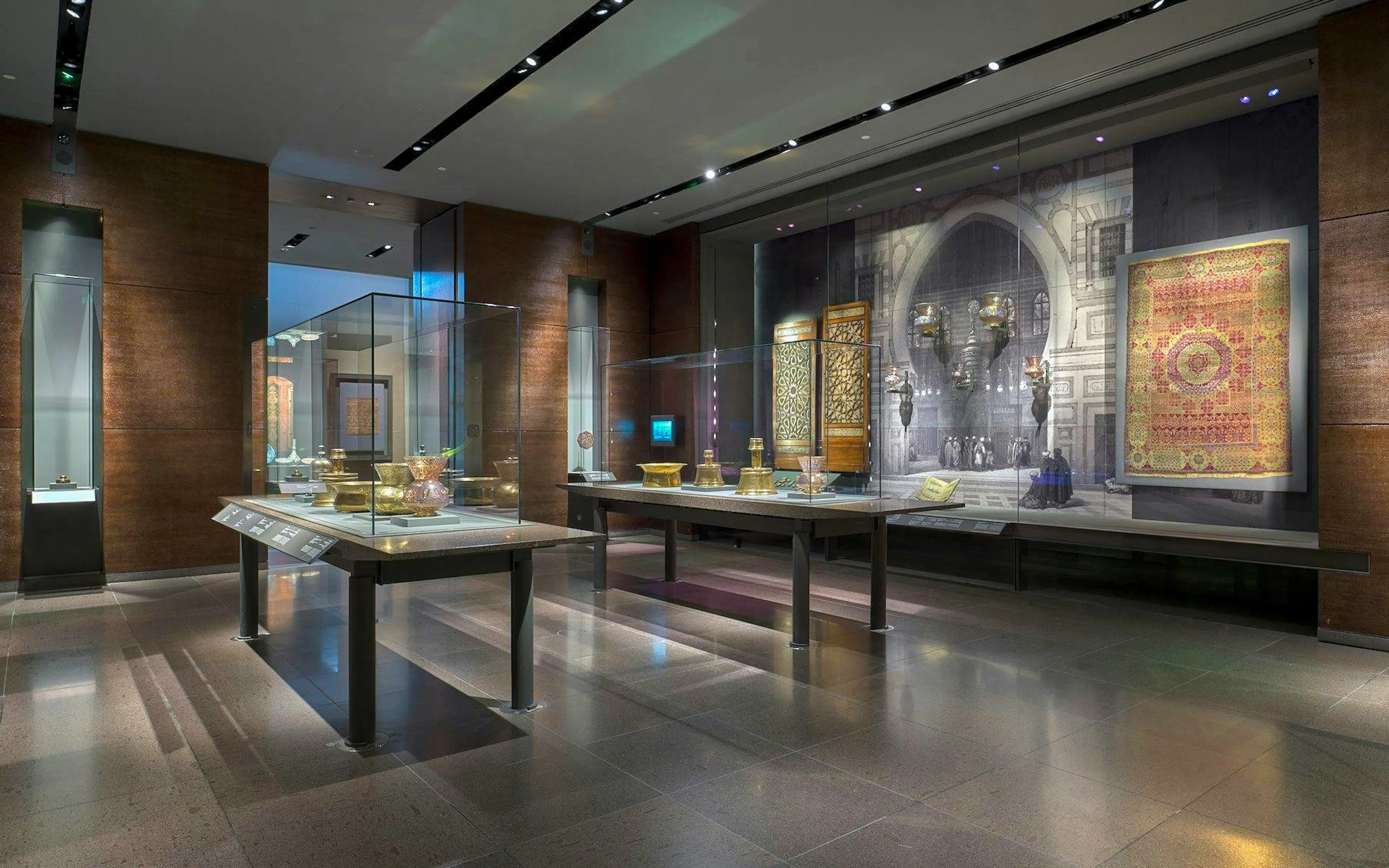
Permanent galleries
Trace Islamic art from the 7th to the 20th centuries through objects chosen for craftsmanship as much as age. This is the core visit, and it rewards slow looking far more than rushing from case to case.
Temporary exhibitions
Your ticket includes these, so they are worth planning around. They often give the broader permanent collection a sharper focus, and they can easily add another 20–30 minutes to the visit.
Ceramics and metalwork
Bowls, lamps, ewers, and vessels show how everyday function and ornament meet. These rooms are some of the easiest to enjoy on a first visit, especially if you use the audioguide to decode details.
Manuscripts and calligraphy
These galleries slow the pace in the best way. Look for how script becomes image, decoration, and devotion at once; they are often quieter than the busier rooms and easier to absorb carefully.
Textiles and decorative arts
Pattern, color, and surface take over here. If you are short on time, do not skip these rooms — they show how Islamic design moved beyond courts and mosques into daily life.
How to explore the Museum of Islamic Art
How much time to spend?
Budget 2–3 hours for a satisfying first visit, or 60–90 minutes if you only want the main galleries. The pace changes if you listen to the QR-code audioguide in full or spend longer in the temporary exhibitions included with your ticket.
Best visit order
Start with the permanent galleries so you build a visual timeline from the 7th to the 20th centuries. Move into the temporary exhibitions after that, then slow down in the manuscript, textile, and decorative arts rooms once your eye is tuned to smaller details.
Must-see highlights
Must-see: the permanent galleries, the manuscript and calligraphy rooms, and at least one temporary exhibition during your visit. Optional: a slower second pass with the audioguide through ceramics, metalwork, and decorative arts, which can add 30–45 minutes.
Worth adding nearby
If you want to stretch the outing, leave a little time for the museum grounds after the galleries. That adds about 20–30 minutes and gives the visit a calmer finish than heading straight back into traffic.
Guided or self-paced?
Self-paced works very well here because the collection is designed for close looking, and the included QR-code audioguide gives enough context for most first-timers. A guided visit would only be worth prioritizing if you want deeper art-historical interpretation; otherwise, the Museum of Islamic Art Admission Entry Ticket is the right fit.
Brief history of the Museum of Islamic Art
- 1980s: Qatar begins building a major collection of Islamic art through acquisitions spanning Spain, North Africa, the Middle East, Central Asia, and South Asia.
- 2003: Architect I.M. Pei accepts the commission and studies early Islamic monuments to shape a building that feels modern without losing its historical roots.
- 2008: The Museum of Islamic Art opens in Doha, bringing together objects from the 7th to the 20th centuries in a purpose-built waterfront museum.
- 2022: The museum reopens after gallery updates and a refreshed presentation ahead of a new wave of international visitors to Qatar.
- Today: Permanent and temporary exhibitions continue to frame Islamic art as a cross-regional story of trade, scholarship, faith, and design.
Architecture of the Museum of Islamic Art
Built from pale limestone and stacked geometric volumes, the Museum of Islamic Art changes character as you move around it: severe from one angle, almost weightless from another. That shifting effect is deliberate. I.M. Pei drew on early Islamic architecture without copying a single monument, so the building feels abstract, calm, and ceremonial instead of nostalgic. Inside, the spaces rise and narrow in ways that make light part of the design; shadows sharpen edges, and the central atrium pulls your eyes upward before the galleries slow everything back down. Notice how the stone changes color through the day and how the setting isolates the museum from the city. The approach feels intentional, as if the building wants you to arrive a little quieter than you left the street.
Who built it?
The museum was commissioned by Qatar as a national cultural statement and designed by I.M. Pei, who came out of retirement for the project. His task was bigger than designing a container for art: he had to create a modern landmark that could house Islamic art without turning it into pastiche.
The collection changes the way you read Islamic art
What stays with many visitors is not a single object but the museum’s way of connecting distant places. A bowl from one region, a manuscript from another, and a textile from somewhere else can suddenly feel part of the same conversation. That curatorial approach matters because it shifts Islamic art away from a narrow, country-by-country reading and toward a broader story of movement, exchange, and shared visual ideas. Even a short visit can change how you notice pattern, calligraphy, geometry, and craftsmanship elsewhere in the city afterward.
Frequently asked questions about Museum of Islamic Art
Yes. Your ticket includes audioguide access on-site through a QR code, so you can use your own phone as you move through both the permanent and temporary exhibitions at your own pace.
Yes. The 1-day ticket includes access to all permanent and temporary exhibitions, which makes it better value than a quick walk-through. It is worth checking what is on before you enter so you can pace the visit.
Yes. The museum is open daily except Wednesday, so avoid building your visit around a midweek stop. If your schedule is tight, choose another day and use the 1-day validity to keep things flexible.
Yes for wheelchairs, and generally yes for strollers. The museum is fully accessible for wheelchair users, with suitable access throughout the venue, and its layout is easier to navigate than many older museum buildings.
Children under 16 must be accompanied by an adult. That matters if older teens were expecting to enter independently, so plan the visit as a shared stop rather than a drop-off activity.
Yes. On-site parking is available, which makes the museum an easy stop if you are exploring by car rather than relying entirely on public transportation. It is one of the simpler museum visits to slot into a flexible day.
An open-ended visit works better. Because the ticket is valid for 1 day and includes all exhibitions, you do not need to rush; this is a museum that rewards lingering once a room or object catches your attention.


