Hours, directions, entrances and the best time to arrive
Visiting National Museum of Qatar: Your Complete Guide
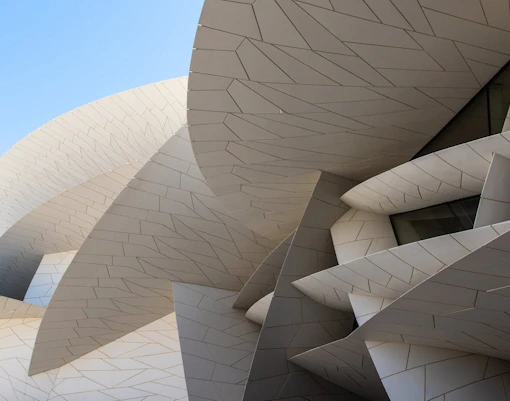
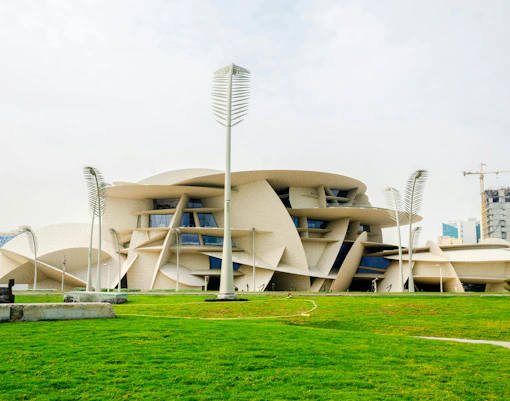
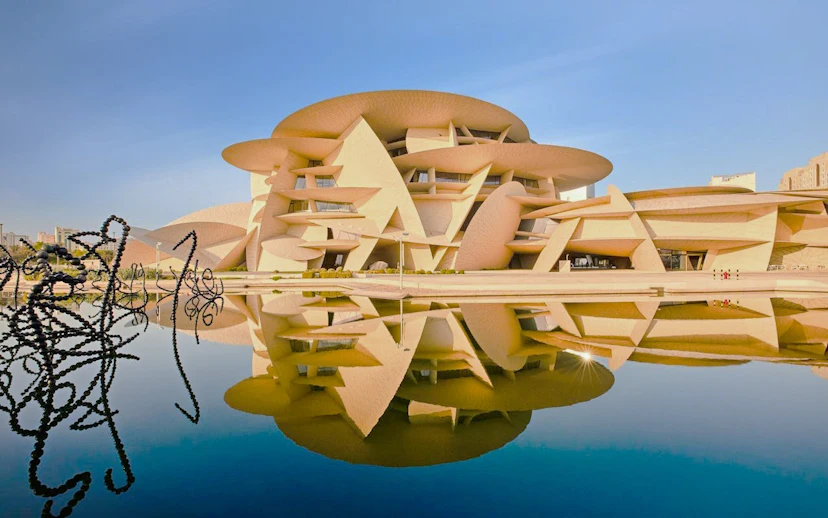
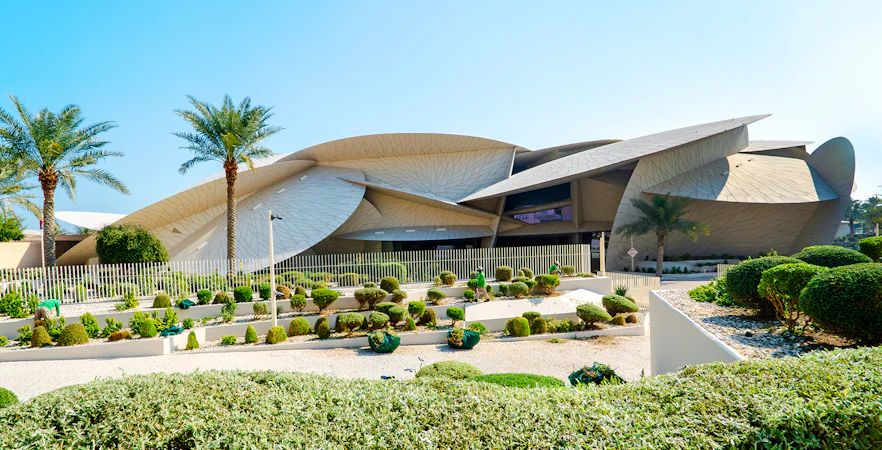
The National Museum of Qatar is Doha's flagship history museum, best known for Jean Nouvel's desert rose architecture and its immersive route through Qatar's geology, heritage, pearling story, and modern statehood. A full visit is more demanding than people expect because the main route runs about 1.5 km and rewards slow pacing over a quick sweep. Timing also matters right now, since some permanent galleries are under enhancement through December 30, 2026. This guide helps you plan entry, timing, route, and on-site logistics.
Quick overview: National Museum of Qatar at a glance
If you want to visit National Museum of Qatar without second-guessing the basics, start here.
- When to visit: Saturday, Sunday, Monday, Wednesday 9am–7pm, Thursday 9am–9pm, Friday 1:30pm–7pm, Tuesday closed; the first 90 min after opening is noticeably calmer than Friday afternoon, because family groups and weekend visitors build later in the day.
- Getting in: From QAR 25 for standard entry while gallery enhancement continues; booking ahead helps most in winter weekends and on Thursdays, though same-day entry can still work when walk-up slots remain.
- How long to allow: 2–4 hours for most visitors, and closer to 4 hours if you want the films, the heritage galleries, the Old Palace, and time for the exterior architecture.
- What most people miss: The restored Old Palace and the exterior disc viewpoints make the story click, but many visitors rush out after the final multimedia galleries.
- Is a guide worth it? An audio tour is usually enough for a first visit, but a guide adds real value if you want stronger context on archaeology, architecture, and the shift from old Qatar to modern Doha.
Jump to what you need
🕒 Where and when to go
🗓️ How much time do you need?
Visit lengths, suggested routes and how to plan around your time
🎟️ Which ticket is right for you?
Compare all entry options, tours and special experiences
🗺️ Getting around
How the galleries are laid out and the route that makes most sense
🖼️ What to see
Pearl Carpet of Baroda, Old Palace, whale shark model
♿ Facilities and accessibility
Restrooms, lockers, accessibility details and family services
Where and when to go
How do you get to the National Museum of Qatar?
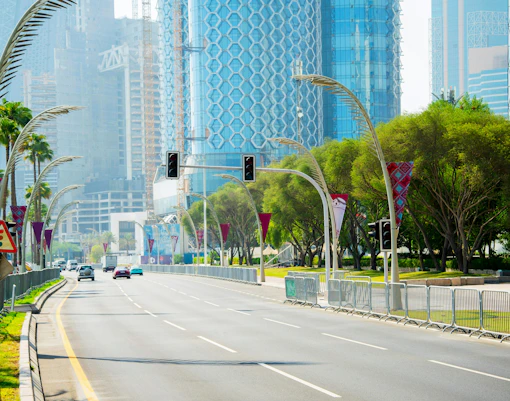
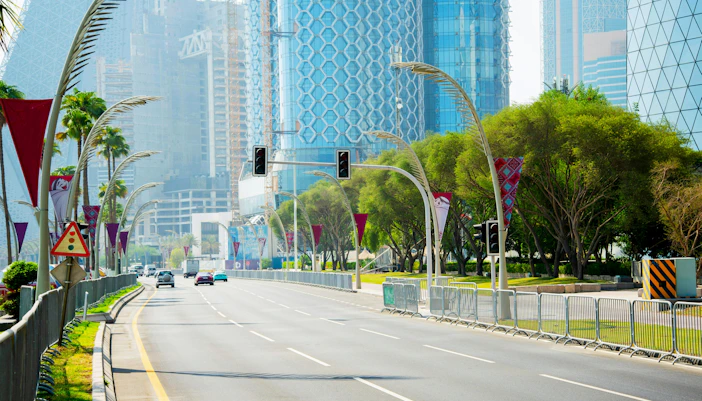
The museum sits at the southern end of the Doha Corniche, close to the National Museum metro stop and about 15–20 min by car from Hamad International Airport.
Museum Park Street, Doha, Qatar
- Metro: National Museum station, Gold Line → short walk → the easiest low-stress option from Msheireb and Souq Waqif.
- Taxi/rideshare: Main museum drop-off → minimal walking → the most comfortable choice in summer heat or on a stopover.
- Car: On-site parking → short transfer to the entrance → accessible golf carts connect the parking area and museum entry.

Which entrance should you use?
Most visitors use the main museum entrance, and the mistake here is not the door but the timing: security screening and ticket scanning both happen before you start the route.
- Main entrance: Located at the primary visitor drop-off on Museum Park Street. Best for all ticket holders and walk-up visitors. Expect 5–15 min wait in quieter periods and longer on winter weekends or Thursday evenings.

When is National Museum of Qatar open?
- Saturday, Sunday, Monday, Wednesday: 9am–7pm
- Thursday: 9am–9pm
- Friday: 1:30pm–7pm
- Tuesday: Closed
- Last entry: 45 min before closing
When is it busiest? Friday afternoons, winter weekends, and December through February feel busiest, with more family traffic and a noisier gallery atmosphere.
When should you actually go? A weekday opening slot gives you the calmest galleries, cleaner architecture photos, and more room to linger in the film-heavy early sections.
Thursday is the one late-close slot that changes how you should plan
Thursday is the only day that pushes closing to 9pm, so it's your best after-work or post-lunch visit if daytime heat is high or your Doha schedule is tight. The trade-off is that it can feel busier than a regular weekday morning.
How much time do you need?
| Visit type | Route | Duration | Walking distance | What you get |
|---|---|---|---|---|
Highlights only | Entry → early geology and natural environments galleries → key heritage rooms → Old Palace → exit | 2–2.5 hrs | ~1.5 km | You cover the main story and the Old Palace, but you will move quickly through films and spend less time on architecture views. |
Balanced visit | Entry → full chronology through geology, archaeology, heritage, pearling, modern-state galleries → Old Palace → short exterior walk | 3–3.5 hrs | ~1.5–2 km | This gives you the full narrative route with proper time for archaeology, heritage, and the palace, without feeling rushed. |
Full exploration | Full indoor route → films and immersive galleries at a slower pace → Old Palace → architecture loop outside → park/cafe stop | 4+ hrs | ~2 km+ | This is the most complete visit, including slower gallery pacing, exterior photography, and breaks, but it needs real stamina and focus. |
How long should you set aside for the National Museum of Qatar?
You'll need around 2–3 hours for a solid first visit. That covers the main narrative route, the strongest immersive galleries, and the Old Palace without rushing every film. If you want architecture photos, a cafe stop, or time in the park and playgrounds, plan closer to 4 hours. The section people most often shortchange is the middle heritage route, which is where the museum becomes more than just a striking building.
Timing matters more than ticket type
⚠️ With just one main entry ticket in the mix, the real mistake is leaving booking too late for winter weekends or Thursday evenings. Buy only through the official site or a verified partner so you do not end up troubleshooting a bad ticket at the entrance.
How do you get around National Museum of Qatar?
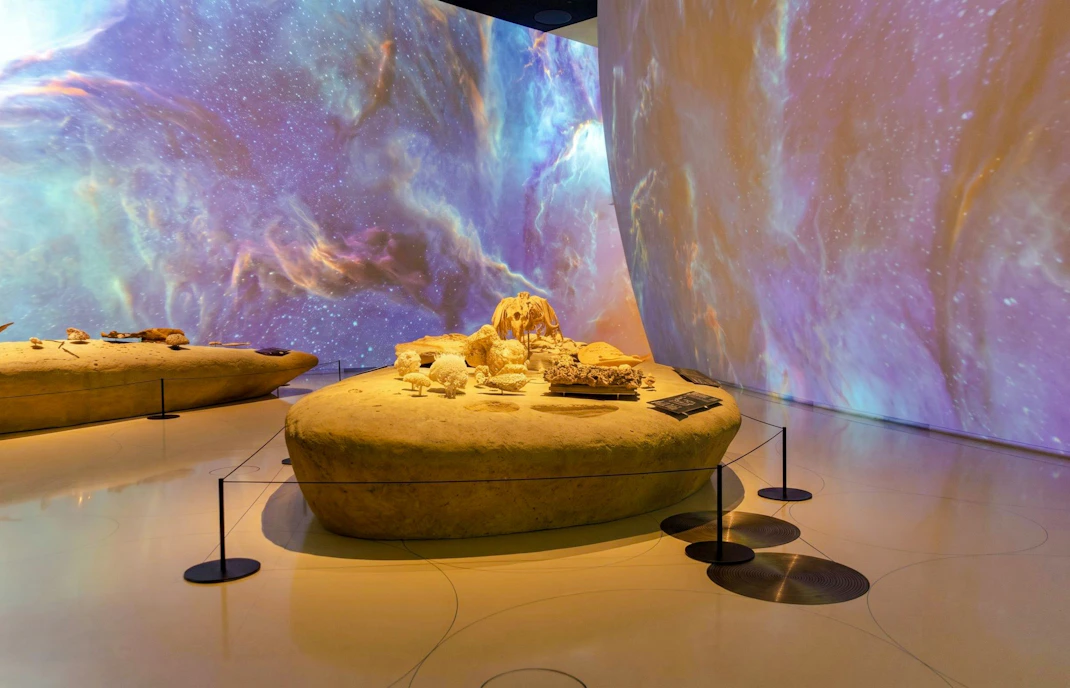
The galleries follow one main narrative route
The museum is linear rather than free-form: you move through about 1.5 km of connected galleries, so it is easy to navigate but also easy to tire out if you stop at every film in the first rooms.
- Formation of Qatar and natural environments: Geology, fossils, desert and marine life, and the suspended whale shark model → budget 30–45 min.
- Archaeology of Qatar: Early settlements, rock-carving reconstructions, and artifact timelines → budget 25–40 min.
- Bedouin, coastal, and pearling heritage: Tents, oral histories, trade, and everyday life before oil → budget 40–60 min.
- Oil, state formation, and the Old Palace: Modern nation-building and the restored royal residence at the route's heart → budget 35–50 min.
Suggested route: Follow the full chronology without skipping ahead, save your last energy for the pearling galleries and the Old Palace, and leave the park for after the indoor route so the story lands in the right order.

Maps and navigation tools
- Map: Visitor map/on-site guide → covers the gallery sequence, palace, park, cafés, and services → pick it up at entry before you begin.
- Signage: Wayfinding is generally good, but the curved architecture can hide what comes next, so a map helps more than people expect.
- Audio guide / app: Multilingual audio tours add the most value in archaeology and heritage galleries, where context matters more than object count.
💡 Pro tip: Do not peel off to the park too early — the Old Palace works best as the end of the story, not a mid-route detour.
Where are the masterpieces inside National Museum of Qatar?
1/6
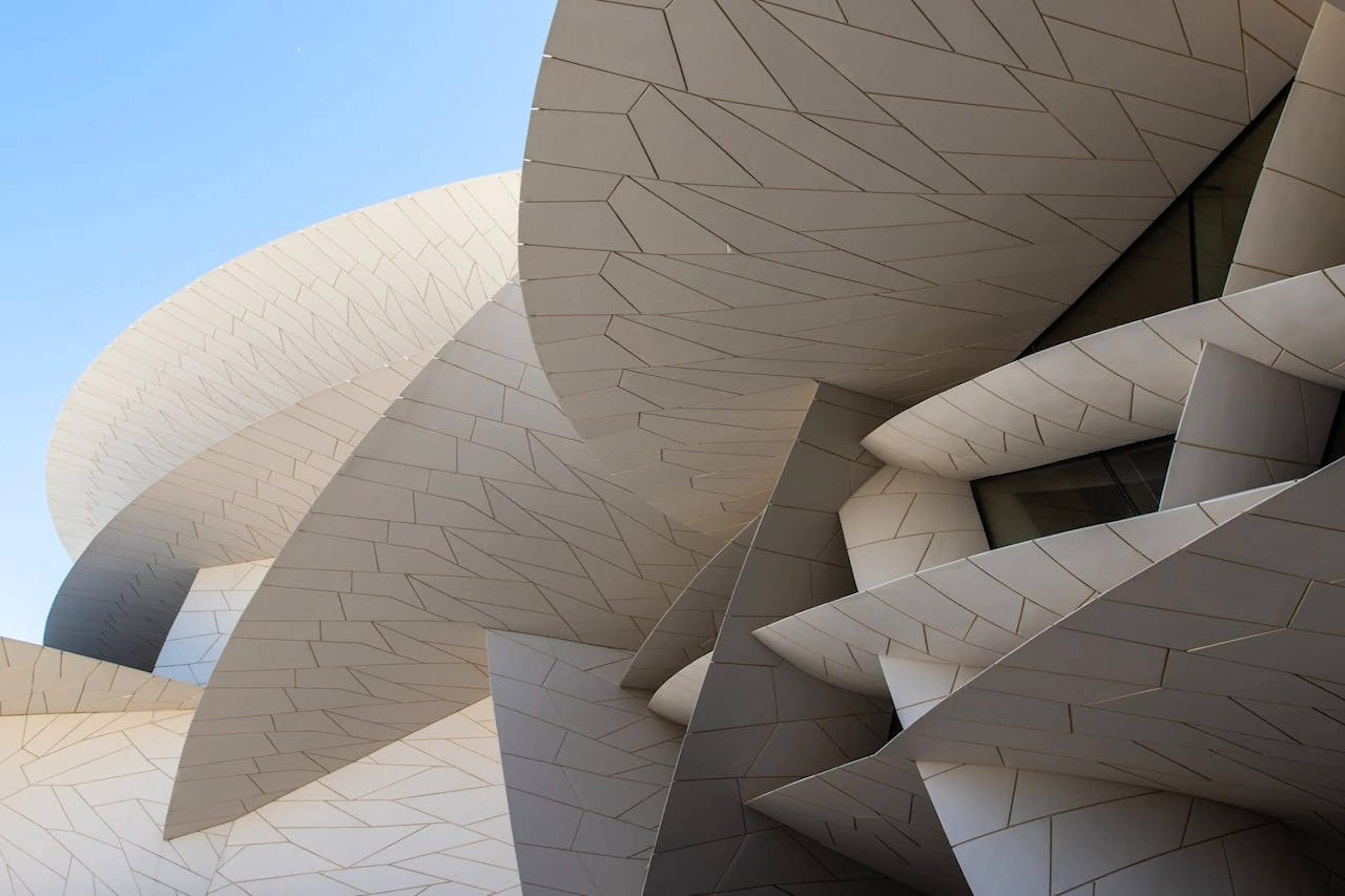
Desert rose architecture
Architect: Jean Nouvel
Even before you enter, this is one of the museum's biggest highlights. The interlocking discs create constantly changing shadows, frames, and sightlines, so the building feels different every 20 steps. Most visitors photograph the façade once and move on too quickly, but the best angles come from walking around the outer curves and using the palace as contrast against the contemporary shell.
Where to find it: Around the museum exterior, main forecourt, and the approaches framing the Old Palace core
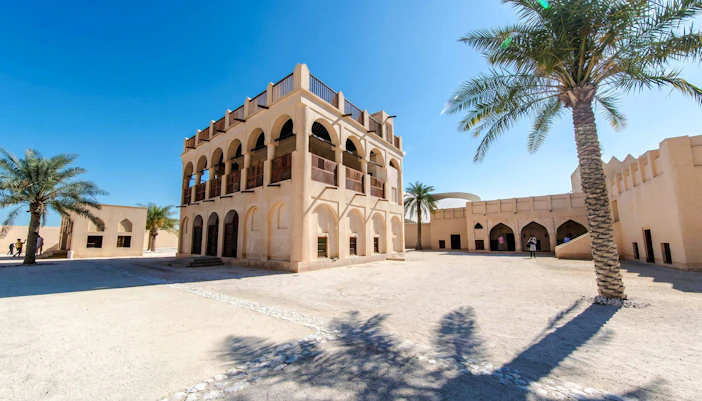
The Old Palace
Era: Early 20th century
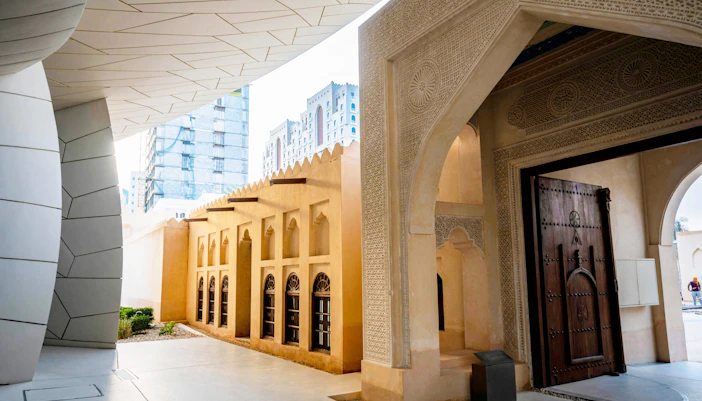
The restored Palace of Sheikh Abdullah bin Jassim Al Thani is the emotional anchor of the museum, because it turns the story from abstract history into a lived place. Its quieter courtyards and rooms are the sharpest contrast to the immersive digital galleries around them. Most visitors hit museum fatigue by this point and rush through, which is exactly when you should slow down.
Where to find it: At the historic center of the museum complex, reached near the end of the main narrative route
Pearl Carpet of Baroda
Attribute: 19th-century ceremonial textile
If its gallery is open during the current enhancement program, this is the object to spend real time with. It connects Qatar's pearling story to the Gulf's wider trading networks and is visually dense enough that quick glances miss the craft entirely. What people often overlook is how small details of pearls and gemstones only resolve when you step closer and view it slowly.
Where to find it: In the collection galleries associated with Qatar's pearling and global trade history
Whale shark and natural environments gallery
Attribute: Natural history installation
The opening galleries are more engaging than many visitors expect, especially if you arrive thinking the museum is only about recent national history. The suspended whale shark model and the desert-marine ecosystem displays make the early route feel cinematic rather than academic. Many adults rush this section to get to the heritage galleries, but it is one of the strongest parts for families.
Where to find it: In the early galleries covering Qatar's geological formation and natural environments
Bedouin, coastal, and pearling galleries
Attribute: Social history sequence
This is where the museum's story becomes most human. Oral histories, tents, seafaring material, and pearling displays explain daily life before oil in a way that gives the later modern galleries real weight. The detail most people miss is how the museum links desert and sea life together, rather than treating them as separate stories.
Where to find it: In the middle section of the chronological route, after archaeology and before the modern-state galleries
Oil and state formation galleries
Era: 20th century to the present
The final galleries explain how Qatar changed from a pearling economy into a modern state, and they do it with large projections, archival footage, and a faster rhythm than the earlier rooms. Visitors often hit these spaces when they are already tired, so they remember the spectacle but miss the historical sequence. A short pause before entering helps more than people think.
Where to find it: In the last chapter of the indoor route, immediately before the conclusion around the palace
Most visitors leave before the Old Palace has done its job
The final multimedia galleries can feel like the end, which is why people drift toward the exit before properly exploring the palace courtyards and rooms at the center of the complex. Stay for that last section — it is what ties the entire old-Qatar/new-Qatar contrast together.
Facilities and accessibility
- 🎒 Cloakroom / lockers: Large bags should be checked before entry, and free luggage storage is commonly reported by visitors.
- 🚻 Restrooms: Restrooms are available within the museum complex, and accessible facilities are part of the visitor setup.
- 🍽️ Cafés / restaurant: Desert Rose Café is the lighter stop, while Jiwan is the full restaurant option if you want to turn the visit into a longer cultural outing.
- 🛍️ Gift shop / merchandise: The museum shop is worth a look for design-led books, objects, and Qatar-focused souvenirs rather than generic museum stock.
- 🅿️ Parking: On-site parking is available, which matters if you're arriving by car or pairing the museum with other stops along the Corniche.
- 🩺 First aid / medical station: Staff support is available within this large museum environment, which is useful if you're visiting with children or older relatives.
- 🧩 Sensory room: A dedicated sensory room is part of the museum's accessibility offer and is one of the more thoughtful facilities in Doha's museum circuit.
- ♿ Mobility: The museum offers step-free access, lifts, wheelchairs, and wheelchair-accessible golf carts between the parking area and entrance, though outdoor cobblestones and some uneven flooring can still slow parts of the route.
- 👁️ Visual impairments: Tactile elements and audio assistance are part of the visit, which makes this museum easier to engage with than a display-case-only collection.
- 🧠 Cognitive and sensory needs: A sensory room is available, and weekday mornings are usually the easiest low-crowd window if you want a calmer visit.
- 👨👩👧 Families and strollers: Broad indoor circulation makes the main route manageable with strollers, but the outdoor surfaces around the park and archaeology-adjacent areas can feel bumpier.
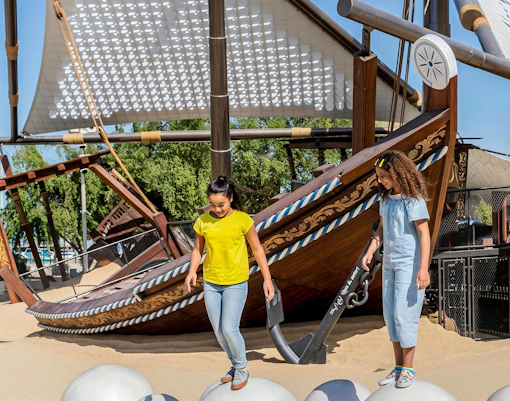
The museum works well for children because it mixes large-scale films, tactile elements, sound, and outdoor play areas rather than relying on long text panels alone.
- 🕐 Time: 1.5–3 hours is realistic with children, and the natural environments galleries plus the playgrounds usually hold attention best.
- 🏠 Facilities: Restrooms, cafés, stroller-friendly circulation, and the outdoor family areas make breaks easier to handle than in a more traditional museum.
- 💡 Engagement: Start with the geology and wildlife sections so children are hooked before the denser heritage sequence begins.
- 🎒 Logistics: Use a morning slot, pack light, and save the park for the end so you don't lose momentum halfway through the indoor route.
- 📍 After your visit: Old Doha Port is an easy next stop if you want a short waterside wander after the museum.
Rules and restrictions

What you need to know before you go
- Entry requirement: Use a valid dated ticket for your selected visit, and keep QID or student ID ready if you are using resident or concession eligibility.
- Bag policy: Large bags should be checked before entry rather than carried through the galleries.
- Dress guidance: Modest clothing is the safest choice here, with shoulders and knees covered for a smooth museum visit in Qatar.
- Re-entry policy: Admission is single-entry, so once you leave the museum complex your visit is treated as finished.
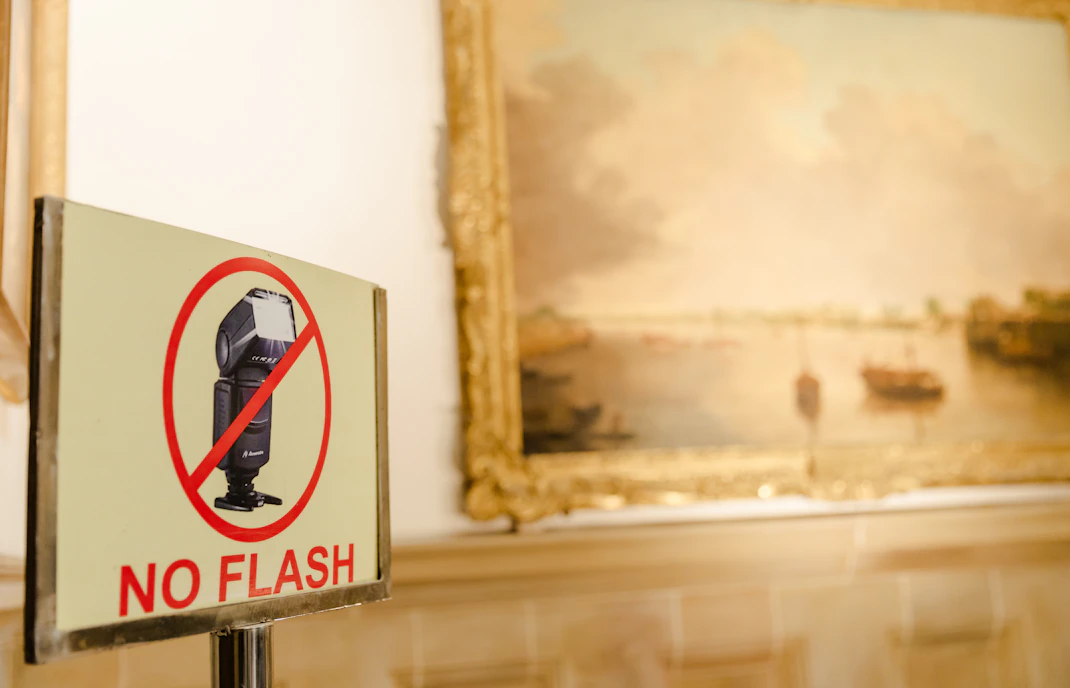
Not allowed
- 🖐️ Flash, tripods, and selfie sticks: These are not allowed in the galleries, even where standard photography is permitted.
- 🎒 Oversized bags: Large luggage is not allowed through the route and should be left at the storage point before you enter.
Photography
Personal photography is generally fine for a normal self-guided visit, and the building is especially popular for architecture shots inside and out. Flash photography is not permitted, and tripods plus selfie sticks are prohibited. Pay attention to gallery signage during temporary exhibitions or enhancement work, because room-level rules can be tighter than in the main permanent route.

Good to know
- Current access: Some permanent galleries remain closed for enhancement through December 30, 2026, which is why admission is currently reduced.
- Children: Children under 12 should stay with an adult throughout the visit rather than exploring the route independently.
Once you leave National Museum of Qatar, your visit is over
⚠️ Re-entry is not permitted once you exit National Museum of Qatar. Plan your restrooms, café stop, and gift shop browse before leaving, because the ticket is single-entry and stepping out ends the visit.
Practical tips
- Booking and arrival: Book ahead for winter weekends and Thursday evenings, and aim to arrive 15–20 min early so security and ticket scanning do not eat into your gallery time.
- Pacing: Save your attention for the Bedouin, coastal, and pearling galleries plus the Old Palace, because that middle-to-final stretch is where the museum's story becomes most memorable.
- Crowd management: Weekday mornings from October to February feel calmer than Friday afternoons, when family traffic and local weekend visits make the route noticeably noisier.
- What to bring or leave behind: Bring a light layer for the air-conditioned galleries and keep your bag small, because the indoor route covers about 1.5 km and large bags need to be checked.
- Food and drink: Eat after the main route rather than halfway through it, since leaving the galleries means using up a single-entry ticket and resetting your day.
- Heat planning: In hotter months, do the indoor museum first and leave the park, lagoon, and exterior photo loop for sunset or skip them entirely at midday.
- Current closure reality: If one specific object is your priority, especially the Pearl Carpet of Baroda, check the live gallery status before you go because enhancement work continues through late 2026.
What else is worth visiting nearby?
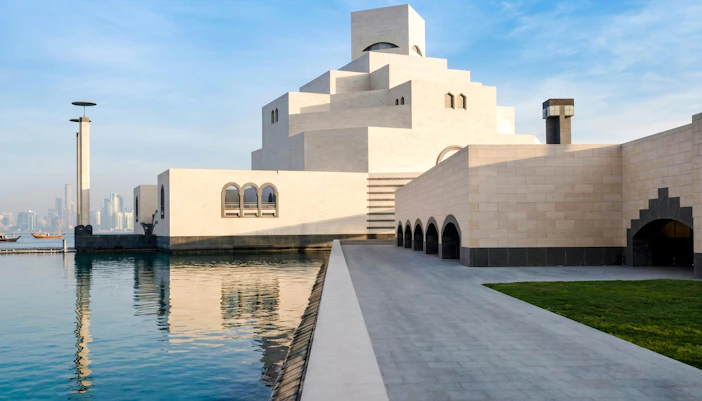
Commonly paired: Museum of Islamic Art
- Distance: Short taxi ride — 5–10 min by taxi or 20–30 min on foot in suitable weather
- Why people combine them: The pairing works because the National Museum of Qatar gives you Qatar's story, while the Museum of Islamic Art broadens the lens to centuries of art and objects from across the Islamic world.
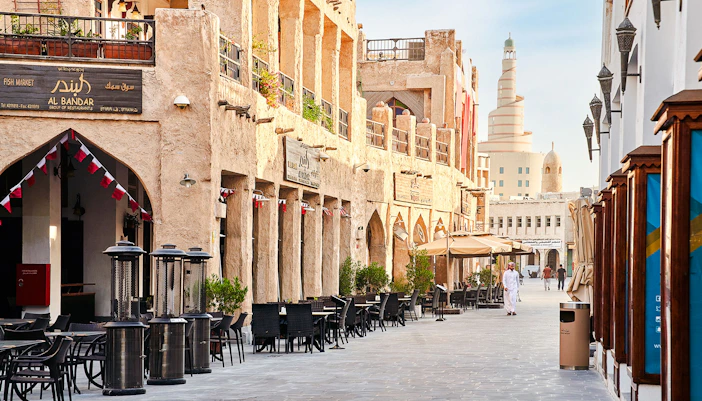
Commonly paired: Souq Waqif
- Distance: Short taxi or metro hop — about 8–12 min by car
- Why people combine them: This is the most natural same-day follow-up if you want the museum's historical context to turn into a lived Doha experience with food, street life, and traditional market lanes.
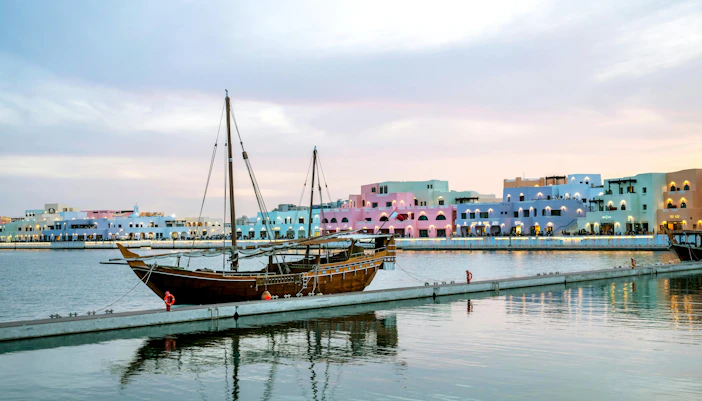
Also nearby
Old Doha Port
- Distance: Short taxi ride — 5–10 min by car
- Worth knowing: It is an easy add-on if you want a more relaxed waterfront stop with colorful façades, dining, and cruise-port energy after the museum.
Doha Corniche
- Distance: Adjacent
- Worth knowing: This is the simplest free extension to your visit, especially for skyline photos, but it is much more comfortable in the cooler months or after sunset.
Eat, shop and stay near National Museum of Qatar
- On-site: Jiwan is the full restaurant choice for a longer meal, while Desert Rose Café works better for coffee and a lighter break during or after your visit.
- Old Doha Port dining: 5–10 min by taxi, Old Doha Port; best if you want a post-museum waterside meal without straying far from this end of the city.
- Souq Waqif restaurants: 8–12 min by taxi, Souq Waqif; better if you want a wider range of Qatari and regional food after the museum rather than another design-led cultural setting.
- Corniche hotel cafés: Short drive along the Corniche, Doha waterfront; useful for a quieter coffee or business-style meeting point if you are fitting the museum into a stopover day.
- 💡 Pro tip: If you want Jiwan, treat it as the end of the museum rather than a mid-visit break, because a single-entry ticket makes it awkward to step out and come back.
- National Museum of Qatar gift shop: This is the most worthwhile shopping stop in the immediate area for design objects, books, and Qatar-focused souvenirs tied to the museum's architecture and collections.
- Old Doha Port boutiques: Better for a casual browse after the museum if you want lifestyle shops and a waterfront setting rather than a museum-store purchase.
The museum area works well for a short Doha stay if you want quick access to the airport, the Corniche, and a few culture-heavy stops in one cluster. It is less compelling as a long-stay base if you want nightlife, dense dining options, or easy walking between many evening spots. For most travelers, it is a practical location rather than the most atmospheric one.
- Price point: This area skews mid-range to upscale because of its waterfront and transit convenience, though short stopovers often value that trade-off.
- Best for: Travelers on a short Doha trip, Qatar Airways stopovers, and anyone who wants a museum-and-Corniche day without crossing the city repeatedly.
- Consider instead: Souq Waqif suits longer stays if you want more food and evening atmosphere, while West Bay works better if hotel choice and business-style convenience matter more.
Frequently asked questions about visiting National Museum of Qatar
Most visits take 2–4 hours. If you move quickly through the films and focus on the main galleries, you can do it in about 2 hours, but 3–4 hours is more realistic if you want the Old Palace, architecture photos, and a proper pause in the heritage galleries.
No, advance booking is not always essential, but it is the safer move for winter weekends, Thursday evenings, and any visit where you are working around a stopover or fixed Doha itinerary. The museum uses dated admission, and one-hour entry slots may apply even when walk-up tickets are still available.
Arrive 15–20 minutes early. That gives you enough buffer for security screening, ticket scanning, and getting oriented without turning the first galleries into a rushed start, which matters more here because the route is chronological and works best from the beginning.
Yes, but keep it small. Large bags should be checked before entry, and a lighter bag makes this visit easier because the indoor route is about 1.5 km and includes several pauses for films and immersive displays rather than constant walking only.
Yes, standard personal photography is generally allowed. Flash photography is not permitted, and tripods plus selfie sticks are prohibited, so this is a good place for phone or handheld camera shots rather than a full photography setup.
Yes, groups can visit, but the experience works best when you plan your pacing. The museum's strongest sections are film-heavy and sequential, so large groups need more time to move without bunching up, especially in winter or on local weekend afternoons.
Yes, it is one of Doha's easier museums to do with children. Interactive displays, sound, scent, and large-scale visuals help keep the route engaging, and the park plus playgrounds give families a useful outdoor reset in cooler weather.
Yes, the museum is well set up for wheelchair users. Step-free access, lifts, wheelchairs, and accessible golf carts between the parking area and entrance are available, though some outdoor cobblestones and uneven flooring in parts of the route can still slow movement.
Yes, both on-site and nearby. Desert Rose Café works for a lighter stop, Jiwan is the main restaurant option, and you can also continue to Old Doha Port, the Corniche, or Souq Waqif if you want more choice after finishing the museum.
Wear modest clothing with shoulders and knees covered. This is the most comfortable and low-friction choice for a major museum visit in Qatar, and it also makes it easier to move on to other cultural stops afterward without needing to change.
Yes, parts of the permanent galleries are under enhancement through December 30, 2026. That is why admission is currently reduced, so if you are visiting for one specific object or room, check the live gallery status before you go.
Yes, it is one of the better stopover-friendly museum visits in Doha. The museum is roughly 15–20 minutes by car from Hamad International Airport, but keep at least 2–3 hours free if you want the indoor route to feel worthwhile rather than rushed.